


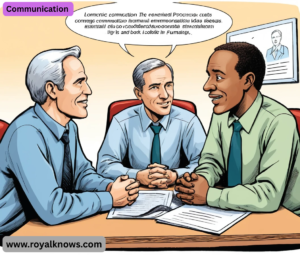
Communication Communication is the essential process of exchanging information, ideas, and emotions. Effective communication, whether verbal or non-verbal, builds understanding and strengthens relationships in both personal and professional spheres. It is the fundamental bridge that connects individuals and fosters successful collaboration.
The Basic Model of Communication
Most models include these key elements:
- Sender: The person who initiates the message.
- Message: The information, idea, or emotion being conveyed.
- Encoding: The process by which the sender translates their thoughts into a message (words, symbols, body language).
- Feedback: The response from the receiver, which allows the sender to know if the message was understood correctly.
- Context: The situation or environment in which the communication takes place (e.g., a formal meeting, a casual chat with a friend).
- Noise: Anything that disrupts or distorts the message. This can be:
- Physical: Actual sound, poor internet connection.
- Psychological: Prejudices, stress, emotional state.
- Semantic: Differences in understanding of words or jargon.
- If any part of this chain breaks down, miscommunication occurs.
Types of Communication
- We communicate in many ways, often simultaneously.
Verbal Communication
- The use of spoken or written words.
- Oral: Face-to-face conversations, speeches, phone calls, video conferences.
- Written: Emails, reports, text messages, books, social media posts.
Non-Verbal Communication
Often more powerful than words, this includes:
- Body Language (Kinesics): Facial expressions, gestures, posture, eye contact.
- Proxemics: Use of personal space and distance.
- Haptics: Communication through touch (e.g., a handshake, a pat on the back).
- Appearance: Clothing, hairstyle, and overall grooming.
Visual Communication
Using visual aids to convey information:
- Images: Photographs, illustrations, infographics.
- Design: Layouts, color schemes, typography.
- Signs and Symbols: Logos, traffic signs, emojis.
Why is Effective Communication So Important?
- Effective communication is the lifeblood of human connection and success in every domain.
- Builds and Maintains Relationships: It’s the foundation of trust, understanding, and intimacy in personal and professional relationships.
- Facilitates Innovation and Collaboration: In the workplace, it allows teams to share ideas, solve problems, and work towards common goals.
- Prevents and Resolves Conflict: Clear communication helps to avoid misunderstandings and is essential for negotiating and finding solutions during disagreements.
- Enhances Productivity: Clear instructions and expectations prevent errors and save time.
- Promotes Personal and Professional Growth: It allows you to express your needs, advocate for yourself, and learn from others.
Barriers to Effective Communication
- Understanding what blocks communication is the first step to improving it.
- Lack of Active Listening: Hearing words but not truly listening to understand.
- Assumptionsand Judgments: Jumping to conclusions or making judgments before the other person has finished speaking.
- Emotional Interference: Strong emotions like anger, stress, or sadness can cloud your message or your ability to receive one.
- Cultural Differences: Differences in language, non-verbal cues, and social norms can lead to misinterpretation.
- Information Overload: Too much information can overwhelm the receiver, causing them to miss key points.
- Language and Jargon: Using technical terms or acronyms the receiver doesn’t understand.
How to Improve Your Communication Skills
- Becoming a better communicator is a lifelong practice. Here are key strategies:
Become an Active Listener
- This is the most crucial skill.
- Show You’re Listening: Use non-verbal cues like nodding and maintaining eye contact.
- Paraphrase and Clarify: “So, if I’m understanding correctly, you’re saying…” This ensures you’ve decoded the message right.
Be Clear and Concise
- Know Your Goal: What is the main point you want to get across?
- Organize Your Thoughts: Avoid rambling. Get to the point in a structured way.
- Use Simple Language: Avoid unnecessary jargon and complexity.
Pay Attention to Non-Verbal Cues
- Be Aware of Your Own Body Language: Ensure your facial expressions and posture match your words.
- Read the Room: Observe the non-verbal signals of others to gauge their reaction and emotional state.
Practice Empathy
- Try to See Their Perspective: Understand the context and emotions of the person you’re communicating with. This builds trust and connection.
Ask for and Provide Feedback
- Check for Understanding: Encourage others to ask questions. Ask “Does that make sense?”
- Be Open to Feedback: Welcome constructive criticism on your own communication style.
Choose the Right Channel
- Is this message best delivered in person? Is an email sufficient? A difficult conversation almost always requires a face-to-face (or video) meeting to convey tone and read non-verbal cues.
Advanced Models of Communication
- The basic linear model (sender -> receiver) is a starting point, but real communication is often more complex.
- It suggests that communication is a dynamic process where both parties are simultaneously senders and receivers. You’re constantly sending verbal and non-verbal messages even while you’re listening. The context and noise are ever-present, and meaning is co-created through the interaction. It emphasizes that communication is an ongoing, collaborative process.
- The Communication Circle (or Dance): This metaphor highlights how communication is a series of steps where each person’s move influences the other’s. A slight shift in tone, a frown, or a question can change the entire direction and outcome of the “dance.”
- Key Communication Contexts and Their Nuances
- Communication adapts drastically to its environment.
Professional & Workplace Communication
- Upward/Downward/Lateral: Communicating with your boss, your team, and your peers all require different approaches regarding formality, detail, and tone.
- Formal vs. Informal Channels: Formal channels include official reports, presentations, and scheduled meetings. Informal channels include “watercooler chat,” instant messaging, and quick hallway conversations (the “grapevine”).
- Cross-Cultural Communication: In a globalized world, this is critical. It involves understanding different:
- Communication Styles: Direct (low-context) vs. Indirect (high-context) cultures.
- Attitudes toward Hierarchy: How openly one can speak to a superior.
- Non-Verbal Norms: The meaning of gestures, eye contact, and personal space varies widely.
- Digital Communication Etiquette (Netiquette): This includes email conventions, video call professionalism, and the appropriate use of instant messaging (e.g., knowing when to send an email vs. a quick Teams message).
Interpersonal Communication
- The Role of Intimacy: Communication deepens with vulnerability, self-disclosure, and shared experiences.
- Conflict Styles: People have innate tendencies for handling disagreement (e.g., competing, collaborating, avoiding, accommodating, compromising). Understanding your style and your partner’s is key to healthy conflict resolution.
- Theories of Relationship Development: Theories like Social Penetration Theory (the “onion” model) describe how communication moves from superficial topics to deeper, more intimate layers as relationships grow.
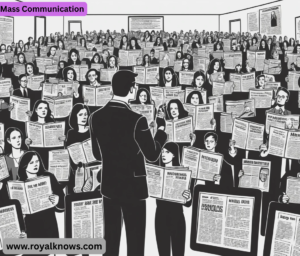
Mass Communication
- One-to-Many: Reaching a large, anonymous audience through media (TV, radio, newspapers, social media influencers).
- Agenda-Setting: The media doesn’t tell people what to think, but it is incredibly successful at telling people what to think about.
- Deeper Barriers and Psychological Factors
Cognitive Biases: Our brains use mental shortcuts that can distort communication. - This makes experts terrible at explaining things to beginners.
- Egocentrism: The difficulty in seeing a situation from another person’s perspective. We assume our point of view is obvious and shared.
- Defensiveness: When we feel attacked, we stop listening to understand and start listening to rebut.
Advanced Skills for Effective Communication
Moving beyond the basics:
- Framing: Presenting the same information in different ways to influence how it is perceived. For example, saying a glass is “half full” vs. “half empty.”
Strategic Questioning:
- Open-Ended Questions: Encourage elaboration (“What was that experience like for you?”).
- Closed Questions: Elicit specific, short answers (“Did you finish the report?”).
- Probing Questions: Dig deeper (“Can you tell me more about that?”).
- Reflective Questions: Check understanding (“It sounds like you’re frustrated because X, is that right?”).
- Managing Difficult Conversations: This requires a structured approach:
Prepare mentally. Know your goal.
- Start with empathy and positive intent. Assume the other person is not trying to be difficult.
- Use “I” Statements: Instead of “You never listen!” (which causes defensiveness), say “I feel frustrated when I’m interrupted, because I want to fully explain my idea.” This focuses on your experience, not their blame.
- Focus on Interests, Not Positions: A position is what someone says they want (“I want this window closed!”). The interest is why they want it (“…because I’m cold”). Understanding the “why” opens up more solutions (e.g., getting a sweater, turning up the heat).
- Cultivating Psychological Safety: This is a team or relationship culture where people feel safe to take risks, voice ideas, and admit mistakes without fear of punishment or humiliation.
 xentro6@gmail.com