


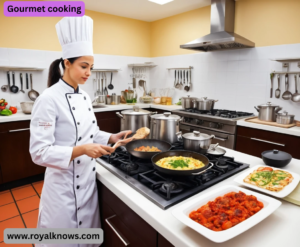
Gourmet cooking Of course. Gourmet cooking is a fascinating and expansive topic that goes far beyond just following a recipe. It’s an art form, a science, and a pursuit of the highest culinary excellence. Let’s break it down into its core components.
What Defines “Gourmet” Cooking?
The term “gourmet” (French for a connoisseur of food and drink) refers to high-quality, intricate, and refined food. It’s characterized by:
- Exceptional Ingredients: The foundation of gourmet cooking. This means seasonal, local, and artisanal produce; prime cuts of meat; sustainable, line-caught fish; rare spices; and specialty products from specific regions (e.g., white Alba truffles, saffron from La Mancha, A5 Japanese Wagyu).
- Technical Precision: Mastering classic and modern techniques is non-negotiable. This includes knife skills, perfect searing, delicate poaching, precise sous-vide cooking, and complex preparations like consommé clarification or creating a perfect soufflé.
- Artistic Presentation: The dish must be a feast for the eyes. Chefs use techniques like plating with tweezers, creating swooshes of purée, adding edible flowers, and balancing color and texture to make the plate visually stunning.
- Complex and Balanced Flavors: Gourmet dishes often feature layered flavors that surprise and delight the palate. They balance the five taste elements: sweet, salty, sour, bitter, and umami. A single bite might evolve through multiple flavor stages.
- Innovation and Creativity: While respecting classic foundations, gourmet cooking often involves innovation—new combinations, molecular gastronomy techniques (spherification, foams), or deconstructing a classic dish into its core components.
Essential Techniques to Master
To venture into gourmet cooking, you should be proficient in these techniques:
- French Mother Sauces: The foundation of classical French cuisine. Mastering Béchamel, Velouté, Espagnole, Hollandaise, and Tomato Sauce allows you to create hundreds of derivative “small sauces.”
- Sous-Vide: Precision cooking in a water bath for perfectly cooked proteins and vegetables edge-to-edge.
- Molecular Gastronomy: Using scientific principles to create new textures and forms (e.g., turning olive juice into a sphere that bursts in your mouth).
- Butchery & Fabrication: Breaking down a whole chicken, filleting a fish, or frenching a rack of lamb.
- Stock and Broth Making: Creating a rich, clear, and flavorful stock is the base for incredible soups, sauces, and risottos.
- Pastry and Doughs: From delicate pâte à choux for cream puffs to laminating dough for a perfect croissant.
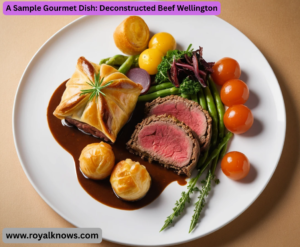
A Sample Gourmet Dish: Deconstructed Beef Wellington
- This example shows how a classic dish is reimagined with gourmet principles.
- Classic Dish: Beef tenderloin coated with duxelles (mushroom paste) and pâté, wrapped in puff pastry, and baked.
Gourmet/Deconstructed Version:
- Component 1: The Beef: A perfectly sous-vide cooked filet mignon, seared in clarified butter to create a crisp crust. Rested and sliced.
- Component 2: The Duxelles: A duxelles made from a blend of wild mushrooms (chanterelles, morels, porcini), shallots, thyme, and reduced Madeira wine, blended into a smooth, rich cream.
- Component 3: The Pastry: A separate, impossibly light and flaky puff pastry twist, baked separately to ensure it stays crisp.
- Component 4: The Sauce: A rich red wine demi-glace reduction, made from veal stock, red wine, and aromatics, strained until glossy.
- Component 5: The Garnish: Microgreens, a sprinkle of Maldon sea salt, and a quenelle of seared foie gras.
- Presentation: Each component is artfully arranged on the plate rather than being combined before cooking. The diner experiences each element individually and in combination.
How to Start Your Gourmet Journey
You don’t need a professional kitchen to begin. Start here:
- Invest in Quality Tools: You don’t need everything, but good sharp knives, a digital probe thermometer, heavy-bottomed pans, and a blender are essential.
- Source Better Ingredients: Visit farmers’ markets, specialty butchers, and fishmongers. Taste and learn about the differences.
- Master the Basics: Perfect your knife skills. Learn how to make a classic French omelet, a flawless roast chicken, and a simple but perfect vinaigrette. Great gourmet cooking is built on flawless fundamentals.
- Study: Read cookbooks from renowned chefs like Thomas Keller (The French Laundry Cookbook), Julia Child (Mastering the Art of French Cooking), and Grant Achatz (Alinea). Watch detailed culinary shows like Good Eats (for the science) or Chef’s Table (for inspiration).
- Taste Critically: When you eat at a nice restaurant, try to identify the ingredients and techniques used. Think about the balance of flavors and the presentation.
- Practice Mise en Place: (French for “everything in its place”). The practice of measuring, prepping, and organizing all your ingredients before you start cooking is a hallmark of professional and gourmet kitchens. It leads to precision and calm.
The Gourmet Mindset: It’s More Than a Recipe
At its core, gourmet cooking is a shift in perspective:
- From Nourishment to Experience: The goal is not just to feed but to create a memorable experience. Every element—taste, aroma, texture, temperature, and visual appeal—is meticulously considered to evoke emotion and delight.
- Respect for Ingredients: A gourmet cook sees themselves as a curator, not just a creator. They seek to understand the ingredient’s story—its origin, how it was raised or grown—and their primary goal is to enhance its natural flavor, not mask it.
- Relentless Pursuit of Improvement: There is always a finer dice, a more perfect sear, a more balanced sauce. It embraces the concept of kaizen (continuous improvement).
The Gourmet Pantry: Essential Building Blocks
- Your ingredients are your paint. A gourmet pantry is stocked with high-quality fundamentals that form the base of complex flavors.
Oils & Vinegars:
- Extra Virgin Olive Oil: High-quality, single-estate for finishing dishes.
- Neutral Oils: Grapeseed or avocado oil for high-heat searing.
- Specialty Oils: Toasted sesame oil, truffle oil (use sparingly!), walnut oil.
- Vinegars: Aged balsamic modena (thick and syrupy), sherry vinegar, champagne vinegar, high-quality red and white wine vinegars.
Aromatics & Alliums:
- Shallots: More delicate and sweet than onions, essential for fine sauces.
- Fresh Herbs: Not dried. Tarragon, chervil, chives, thyme, rosemary. They are often added at the end to preserve their delicate flavor.
- Garlic: Fresh, plump heads. Sometimes confited (slowly cooked in oil) for a sweet, mild paste.

Dairy & Fats:
- European-style Butter: Higher butterfat content (82-86%) for richer sauces and flakier pastries.
- Crème Fraîche: A cultured cream that’s less sour than sour cream and doesn’t curdle when heated. Perfect for finishing sauces.
- Artisanal Cheeses: Parmigiano-Reggiano (aged 24+ months), real Pecorino Romano, high-quality blue cheese (Roquefort, Gorgonzola Dolce).
Seasonings & Umami Bombs:
- Fleur de Sel or Maldon Sea Salt: Flaky finishing salts for texture and a pure salt flavor.
- Tellicherry Black Peppercorns: Larger, more complex in flavor than standard peppercorns.
- Real Vanilla Beans: Infinitely superior to extract for desserts and even savory dishes.
- Anchovies & Capers: Not just for pizza; they dissolve into sauces, adding a deep, savory umami backbone without a “fishy” taste.
- Dried Mushrooms: Porcini mushrooms can be ground into a powder to add intense earthiness to sauces, rubs, and stews.
Gourmet Techniques in Detail: The “Why” Behind the “How”
Let’s unpack two classic techniques that are pillars of gourmet cooking.
The Perfect Pan Sauce:
- This technique transforms the fond (browned bits left in the pan after searing a protein) into a luxurious sauce in minutes.
- Sear: Cook a protein (e.g., a steak, chicken breast) in oil and butter. Remove and rest.
- Deglaze: With the pan off heat, add a liquid—wine, stock, or brandy—and use a wooden spoon to scrape all the fond off the bottom of the pan.
- Reduce: Return to heat and let the liquid boil down by about half, concentrating the flavor.
- Mount with Butter (Monter au Beurre): Remove from heat and swirl in cold, diced butter one piece at a time. This creates a glossy, slightly thickened emulsion that clings to the food. The gourmet touch: Finish with a fresh herb like chopped tarragon or chives.
Knife Skills: The Brunoise Cut
- Precision cutting isn’t just for looks; it ensures even cooking and perfect texture.
- What it is: A fine dice of 1/8 inch (3 mm) cubes.
- How it’s done: Typically used for hard vegetables like carrots or celery. First, cut into julienne (matchsticks), then gather the sticks and dice them perpendicularly into tiny cubes.
- Why it’s gourmet: This cut is used in classic garnishes like a brunoise of red pepper for color or in a consommé garnish where uniformity is essential for elegance.
A Gourmet Challenge for the Home Cook: Risotto
- Risotto is a perfect example of a simple dish that becomes gourmet through technique and ingredients.
- The Standard: Arborio rice, chicken stock, parmesan cheese.
The Gourmet Version:
- Rice: Carnaroli or Vialone Nano rice (higher starch content, creamier result, better texture).
- Stock: Homemade chicken or vegetable stock. This is the single biggest upgrade you can make.
- Technique: Toast the rice in shallots and butter. Add warm stock one ladle at a time, stirring constantly to release the starch. The process is meditative and cannot be rushed.
- The Finish (Mantecatura): Off the heat, vigorously stir in cold butter and freshly grated Parmigiano-Reggiano to create a creamy, glossy emulsion.
- The Gourmet Twist: Top with a seared scallop, a few slices of white truffle, or a drizzle of saffron infusion.
 xentro6@gmail.com