


Hikers guide Of course! Here is a comprehensive “Hiker’s Guide” covering everything from absolute beginner basics to advanced tips for seasoned trekkers.
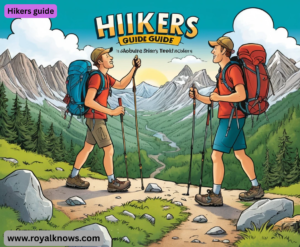
The Ultimate Hiker’s Guide: From Trailhead to Summit
This guide is broken down into logical sections to help you prepare, pack, and hike safely and responsibly.
Part 1: Before You Go – Planning & Preparation
- This is the most important part of any hike. Good planning prevents poor performance!
Choose Your Trail:
- Hikers guide Be Realistic: Honestly assess your fitness level and the fitness of everyone in your group. Don’t attempt a 10-mile, steep climb for your first hike.
- Research: Use apps and websites like AllTrails, Hiking Project, or GAIA GPS. Read recent reviews to check for trail conditions, snow, bugs, or closures.
Key Trail Stats:
- Distance: How long is the trail? (Round-trip or one-way?)
- Elevation Gain: How much uphill is there? 500 ft over a mile is easy; 1,000 ft over a mile is strenuous.
- Time Estimate: Most hikers average 2-3 miles per hour on moderate terrain. Add 1 hour for every 1,000 ft of elevation gain.
- Difficulty: (Easy, Moderate, Hard) – Use this as a guide, but always cross-reference with distance and elevation.
Check the Conditions:
- Weather Forecast: Check not just for the town, but for the elevation you’ll be hiking at. Mountain weather is unpredictable and can change rapidly.
- Trail Conditions: Look for recent reports on mud, snow, river crossings, or downed trees.
- Sunrise/Sunset Times: Plan to be finished well before dark. Always carry a headlamp just in case.
The Golden Rule: Tell Someone Your Plans!
- Leave a Trip Plan: Tell a friend or family member exactly where you are going, which trailhead you’re starting from, and when you expect to return. This is your number one safety tool.
The Ten Essentials (Non-Negotiable Gear)
- This list was created for wilderness survival. Even on a short day hike, these items can save your life.
- Hikers guide Navigation: Map (in a waterproof case), compass, and a GPS device (your phone with an offline map downloaded). Do not rely on phone service.
- Headlamp/Flashlight: Plus extra batteries.
- Sun Protection: Sunglasses, sunscreen (SPF 30+), sun-protective hat, and clothing.
- First Aid Kit: Include blister treatment (moleskin!), bandaids, gauze, antiseptic wipes, and personal medications.
- Knife/Multi-Tool: A simple pocket knife is sufficient for most repairs.
- Fire: Waterproof matches, lighter, and/or fire starters (e.g., cotton balls soaked in petroleum jelly).
- Emergency Shelter: A lightweight emergency bivvy or space blanket. This is different from a tent; it’s for unexpected overnight stays.
- Extra Food: Beyond what you think you’ll need (e.g., an extra protein bar).
- Extra Water: And a way to purify more water (filter, purification tablets, or Steripen).
- Extra Clothes: An insulating layer (fleece, puffy jacket) and a rain jacket and pants, regardless of the forecast.

What to Wear & Pack
Clothing (The Layering System is Key):
- Base Layer (Wicks sweat): Synthetic (polyester, nylon) or merino wool. NO COTTON. Cotton holds moisture and will make you cold.
- Mid Layer (Insulates): Fleece jacket or down/synthetic puffy.
- Shell Layer (Protects from wind/rain): Waterproof and windproof jacket and pants.
- Bottoms: Quick-dry hiking pants or shorts. Again, avoid cotton (like jeans).
Footwear:
- Shoes vs. Boots: Trail runners are lighter and fine for most well-maintained trails. Boots offer more ankle support and protection for rocky, uneven terrain.
- Socks: Wool or synthetic hiking socks. Wear a thin liner sock underneath to prevent blisters.
Backpack:
- A 15-25 liter daypack is perfect for most day hikes.
Other Pack Items:
- Plenty of water (at least 2 liters for a half-day hike)
- High-energy, salty snacks (trail mix, nuts, bars, jerky)
- Fully charged phone & portable power bank
- Trekking poles (highly recommended for saving knees on descents and stability)
Insect repellent
- Personal locator beacon (PLB) or satellite messenger (for remote areas)
On the Trail – Hiking Etiquette & Safety
Right of Way:
- Uphill Hikers have the right of way. It’s harder to restart on a steep incline.
- Hikers yield to horses/stock. Step off the trail on the downhill side and speak calmly to the horse as it passes.
- Bikers yield to hikers and horses. Hikers yield to uphill hikers.
Leave No Trace (LNT) Principles:
- Plan Ahead and Prepare.
- Travel and Camp on Durable Surfaces. (Stay on the trail!)
- Dispose of Waste Properly. Pack out all trash, including food scraps like banana peels.
- Leave What You Find. (No picking flowers or moving rocks.)
- Hikers guide Minimize Campfire Impact. (Use a camp stove for cooking.)
- Respect Wildlife. Observe from a distance. Never feed animals.
- Be Considerate of Other Visitors. Keep noise levels down.
Trail Safety:
- Hydrate and Eat: Drink water and snack before you feel thirsty or hungry.
- Pace Yourself: Start slower than you think you need to. It’s not a race.
- Take Breaks: Stop for 5 minutes every hour to adjust layers, drink, and enjoy the view.
- Know When to Turn Back: Thunderstorms rolling in? Tired? Trail too difficult? There’s no shame in turning around. The mountain will be there another day.
For Beginner Hikers
- Start Small: Choose a popular, well-marked trail under 5 miles with minimal elevation gain.
- Go with a Friend: It’s safer and more fun.
- Focus on Fun, Not Summit Fever: The goal is to enjoy being outside, not just to reach the end.
Next Steps & Advanced Tip
- Train: Build endurance with regular walks, stair climbing, and leg strength exercises.
- Learn Advanced Navigation: How to read a topographic map and use a compass without a GPS.
- Try an Overnight: Progress to backpacking trips, which require more gear (tent, sleep system, stove) and planning.
- Four-Season Hiking: Learn to use specialized gear like microspikes and ice axes for winter and alpine travel.
The Advanced Hiker’s Guide: Skills, Scenarios, and Deep Knowledge
Mastering Navigation (Beyond the App)
- While apps are fantastic, true confidence comes from traditional skills.
- Topographic Map Reading: This is the superpower of seasoned hikers.
- Contour Lines: These brown squiggly lines show elevation. The closer together they are, the steeper the slope.
- Identify Features: Learn to recognize a summit (concentric circles), a valley (V-shaped lines pointing upstream), a ridge (U-shaped lines pointing downhill), and a saddle (dip between two peaks).
- Compass Use: A compass doesn’t need batteries or a signal.
- Taking a Bearing: Learn how to find your direction to a landmark on the map and follow it in the field.
- Triangulation: If you’re lost, you can use two or three known landmarks to pinpoint your exact location on a map.
- Practice: Use your GPS app to confirm your location, not to tell you your location. Try to predict where you are on the map before checking the phone.

Conquering Specific Terrain & Conditions
Steep Descents:
- Use Trekking Poles: They save your knees and provide crucial stability.
- Technique: Keep your knees slightly bent and descend in a controlled, zig-zag pattern if it’s very steep. Don’t lock your knees.
River Crossings (Potentially Very Dangerous):
- Unbuckle Your Pack: If you fall, you need to be able to shed your pack quickly.
- Hikers guide Face Upstream: Sidestep across, facing the direction the water is coming from. Use trekking poles or a sturdy stick for a third point of contact.
- Look for Alternatives: Never cross above a waterfall or a logjam. If the water is deep and fast-moving, turn back. It’s not worth the risk.
Hiking in Bear Country:
- Make Noise: Talk, clap, or sing, especially near running water, in dense brush, or on windy days. Surprising a bear is the worst scenario.
- Carry Bear Spray: Know how to use it—it’s not like bug spray. Keep it accessible, not buried in your pack.
Know the Difference:
- Black Bears: Can be various colors. Play dead only if it makes contact.
- Grizzly/Brown Bears: Have a distinctive shoulder hump. Play dead if it charges or attacks.
 xentro6@gmail.com