


Pollution Of course. Pollution is one of the most critical and complex challenges facing our planet. Here is a comprehensive overview covering its types, causes, effects, and potential solutions.

What is Pollution?
- Pollution is the introduction of harmful materials into the environment. These harmful materials are called pollutants. They can be natural, such as volcanic ash, but are mostly created by human activities. Pollution damages the quality of air, water, and land.
Major Types of Pollution
- Pollution is typically categorized by the part of the environment it affects.
Air Pollution
- The release of pollutants into the air that are detrimental to human health and the planet.
Major Pollutants:
- Particulate Matter (PM2.5 & PM10): Tiny solid or liquid particles from burning fossil fuels, dust, smoke.
- Nitrogen Oxides (NOx) & Sulfur Oxides (Sox): From vehicle emissions and industrial facilities.
- Carbon Monoxide (CO): A poisonous gas from incomplete burning of fuel.
- Ground-Level Ozone (O3): A key component of smog, created by chemical reactions between NOx and VOCs.
- Greenhouse Gases: Carbon Dioxide (CO₂), Methane (CH₄), which cause climate change.
- Sources: Vehicle exhaust, industrial emissions (power plants, factories), burning of fossil fuels, agricultural activities, wildfires.
Water Pollution
Major Pollutants:
- Chemical Waste: Industrial discharge, pesticides, and fertilizers from farms (causing algal blooms).
- Sewage and Wastewater: Untreated or partially treated human waste.
- Plastic Pollution: Microplastics and larger debris.
- Oil Spills: From tanker accidents or offshore drilling.
- Sources: Industrial waste, agricultural runoff, sewage systems, oil spills, littering.
Land Pollution
- The degradation of the Earth’s land surfaces, often caused by improper waste disposal and exploitation of soil.
Major Pollutants:
- Municipal Solid Waste: Household trash and garbage in landfills.
- Industrial Waste: Chemicals, metals, and other byproducts.
- Agricultural Chemicals: Pesticides, herbicides, and fertilizers that seep into the soil.
- Mining Activities: Leaves land scarred and releases toxins.
- Sources: Landfills, illegal dumping, deforestation, mining, intensive agriculture.
Noise Pollution
- Harmful or annoying levels of noise.
- Sources: Traffic, airplanes, industrial machinery, construction sites, loud music.
Light Pollution
- Excessive, misdirected, or obtrusive artificial light.
- Sources: Streetlights, advertising, commercial properties, poorly designed security lights. It disrupts ecosystems and obscures the night sky.
Plastic Pollution
- The accumulation of plastic objects and particles in the environment, adversely affecting wildlife, habitat, and humans.
- Sources: Single-use plastics (bags, bottles, packaging), synthetic textiles, fishing nets.

Causes of Pollution
The root causes are largely tied to modern human activity:
- Industrialization: Factories and power plants burn fossil fuels, releasing vast amounts of pollutants.
- Transportation: The global reliance on cars, trucks, ships, and planes powered by gasoline and diesel.
- Agricultural Practices: Use of chemical pesticides, fertilizers, and manure management release methane and nitrous oxide.
- Energy Production: Coal-fired power plants are a major source of air pollution and CO₂.
- Rapid Urbanization: Increased waste generation and strain on sewage and waste management systems.
- Consumer Culture: High demand for goods leads to more industrial production and generates immense plastic and electronic waste.
Devastating Effects of Pollution
On Human Health
- Air Pollution: Linked to respiratory diseases (asthma, bronchitis, lung cancer), heart disease, strokes, and can impair cognitive development in children.
- Water Pollution: Causes waterborne diseases like cholera, typhoid, and hepatitis. Chemical pollutants can lead to poisoning and long-term health issues like cancer.
- Land Pollution: Chemicals can seep into groundwater or be absorbed by crops, entering the food chain and causing health problems.
On the Environment
- Climate Change: Greenhouse gases trap heat in the atmosphere, leading to global warming, rising sea levels, and extreme weather events.
- Acid Rain: Caused by SOx and NOx emissions, which acidify water bodies and soils, harming forests and aquatic life.
- Ecosystem Damage: Water pollution creates “dead zones” where life cannot survive. Plastic pollution kills marine life through ingestion and entanglement.
- Loss of Biodiversity: Pollutants can poison animals and plants, destroy habitats, and make environments uninhabitable.
Economic Costs
Pollution has a massive economic impact through:
- Healthcare costs for treating pollution-related illnesses.
- Lost productivity from sick workers.
- Cost of cleaning up polluted areas.
- Loss of tourism in polluted regions.
- Damage to agriculture and fisheries.
Solutions and Prevention: What Can Be Done?
- Addressing pollution requires action at all levels—international, governmental, corporate, and individual.
Government & Policy Level
- Strong Regulations: Enforce and strengthen laws like the Clean Air Act and Clean Water Act.
- Invest in Renewable Energy: Shift subsidies from fossil fuels to solar, wind, and geothermal energy.
- Promote Circular Economy: Incentivize recycling, reusing, and reducing waste. Ban single-use plastics.
- Improve Public Transport: Invest in electric buses and trains to reduce vehicle emissions.
- International Agreements: Support and comply with global pacts like the Paris Agreement on climate change.
Corporate & Industry Level
- Adopt Cleaner Technologies: Implement filters (scrubbers) in factories and use less polluting raw materials.
- Waste Management: Treat industrial waste before disposal and find ways to repurpose byproducts.
- Sustainable Sourcing: Commit to sustainable supply chains and reduce packaging.
- Corporate Responsibility: Companies must be held accountable for their pollution footprint.
Individual Level
- Reduce, Reuse, Recycle: Minimize waste, especially plastic.
- Choose Sustainable Transport: Walk, bike, use public transport, or carpool. Consider an electric vehicle.
- Make Informed Choices: Support companies with strong environmental practices. Buy local and organic food to reduce agricultural runoff.
- Educate and Advocate: Raise awareness in your community and vote for leaders who prioritize environmental protection.
Emerging and Less-Discussed Types of Pollution
Beyond the major categories, other forms of pollution are gaining scientific and public attention:
- A common cause is the use of water as a coolant by power plants and industrial manufacturers. When the heated water is returned to the natural environment, it depletes oxygen levels and can shock ecosystems, killing fish and plants.
- Radioactive Pollution: Contamination by substances that emit harmful ionizing radiation. Sources include nuclear power plant accidents (e.g., Chernobyl, Fukushima), improper nuclear waste disposal, and uranium mining. It is extremely dangerous due to its long-lasting and carcinogenic effects.
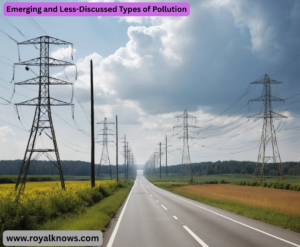
- Visual Pollution: An aesthetic issue that impairs one’s ability to enjoy a vista or view. It includes billboards, power lines, garbage piles, neglected areas, and excessive signage. It can contribute to stress, distraction, and a reduced quality of life.
- Electromagnetic Pollution (EMF): Non-ionizing radiation generated by the ever-growing network of power lines, mobile phones, Wi-Fi routers, and other electronic devices. While the long-term health effects are still debated, it is a subject of ongoing research and public concern.
The Intersection of Pollution, Climate Change, and Justice
- Pollution is not an isolated issue; it’s deeply intertwined with other global crises.
The Climate Feedback Loop:
- Wildfires: Air pollution from climate-change-fueled wildfires releases massive amounts of CO₂ and particulate matter, further worsening air quality and the greenhouse effect.
- Melting Permafrost: As the Arctic warms, permafrost thaws, releasing vast stores of methane—a potent greenhouse gas—which accelerates climate change.
- Dust Storms: Drought and land degradation lead to more dust storms, which contribute to particulate matter air pollution.
Environmental Justice: The Unequal Burden
- Pollution does not affect all people equally. Marginalized communities, low-income populations, and people of color are disproportionately likely to live near polluting industries, highways, and waste disposal sites. This leads to higher rates of asthma, heart disease, and other-related illnesses. This systemic inequity is a critical aspect of the discussion.
Deeper Dive into Causes: The Role of Modern Systems
- Fast Fashion: The rapid production of cheap, disposable clothing creates immense pollution. It consumes vast amounts of water, uses synthetic fibers (a source of microplastics), and relies on toxic dyes that often end up in waterways.
- E-Waste: The rapid turnover of electronics (phones, computers, TVs) creates a massive stream of toxic electronic waste, often shipped to developing countries where it is improperly dismantled, leaching lead, mercury, and cadmium into the environment.
- Industrial Agriculture: Beyond pesticides, the concentration of animals in CAFOs (Concentrated Animal Feeding Operations) creates enormous waste lagoons that can leak nitrates into groundwater and release ammonia and methane into the air.
 xentro6@gmail.com