

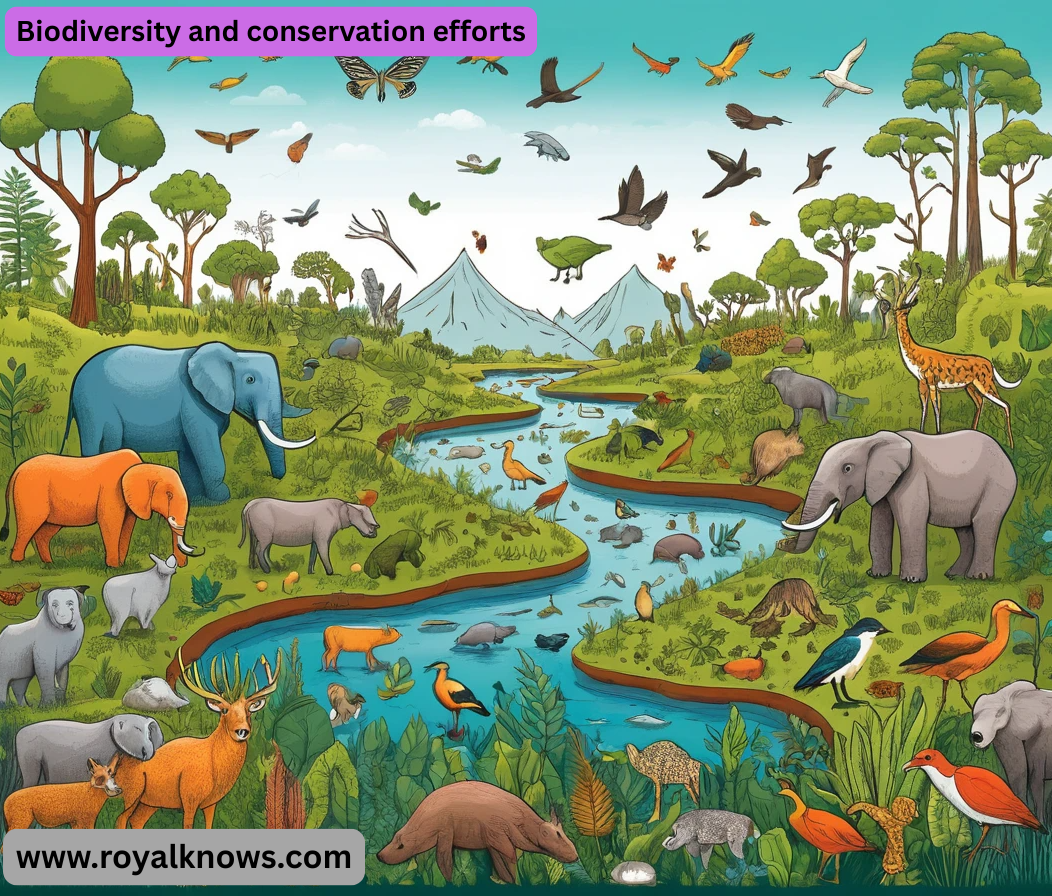
Biodiversity and conservation efforts Conservation efforts, including habitat protection and species reintroduction, are essential to combat threats like habitat loss and climate change, safeguarding our planet’s irreplaceable natural heritage for future generations.
What is Biodiversity
- It encompasses every living thing, from plants and animals to fungi and microorganisms, and the ecosystems they form. It is most often understood on three levels:
- This is crucial for a species’ ability to adapt to changing environments, resist diseases, and ensure long-term survival (e.g., different breeds of dogs or varieties of corn).
- Species Diversity: The variety of species within a habitat or region. This includes the number of different species (richness) and their relative abundance (evenness). Think of a rainforest teeming with insects, birds, mammals, and plants versus a monoculture farm.
- Ecosystem Diversity: The variety of ecosystems on Earth, such as deserts, coral reefs, wetlands, tundras, and tropical rainforests. Each ecosystem provides unique habitats and services.
Why is Biodiversity Important? The Value of Life
- Biodiversity is not just about beautiful animals; it is the foundation of our planet’s health and our own survival. Its value can be categorized in several ways:
- Ecological Services (The Life-Support System):
- Provisioning Services: Provides us with essentials like food, fresh water, wood, fiber, and genetic resources (e.g., for medicine).
- Regulating Services: Regulates our climate, purifies air and water, pollinates crops, controls pests, and mitigates floods.
- Cultural Services: Offers recreational, aesthetic, and spiritual benefits. Think of hiking, birdwatching, and the inspiration we draw from nature.
- Supporting Services: Includes nutrient cycling, soil formation, and photosynthesis—the basic processes that all other ecosystems depend on.
- Economic Value: Industries like agriculture, fisheries, forestry, and tourism are directly dependent on biodiversity.
- Intrinsic Value: Biodiversity has value in and of itself, independent of its usefulness to humans. Every species has a right to exist.
The Biodiversity Crisis: Major Threats
- Human activities are causing a rapid decline in biodiversity worldwide, often called the “Sixth Mass Extinction.” The primary threats are summarized by the acronym HIPPO (coined by E.O. Wilson):
- H – Habitat Loss & Degradation: The #1 threat. This includes deforestation, urbanization, agriculture, mining, and dam construction that fragment and destroy ecosystems.
- I – Invasive Species: Non-native species introduced (often by humans) that outcompete, prey upon, or bring diseases to native species, disrupting ecological balance (e.g., zebra mussels in the Great Lakes, cane toads in Australia).
- P – Pollution: Chemical runoff (pesticides, fertilizers), plastic waste, oil spills, and air/water pollution that poison ecosystems.
- P – Population Growth (Human): A growing human population increases demand for resources, amplifying all other threats.
- O – Overexploitation: Harvesting species from the wild at rates faster than they can naturally replenish. This includes overfishing, illegal wildlife trade (e.g., ivory, rhino horn), poaching, and unsustainable logging.
Two critical additional threats:
- It also causes ocean acidification, which harms coral reefs and shell-forming animals.
- Disease: Emerging diseases, sometimes spread through human activity, can devastate populations with no natural immunity.
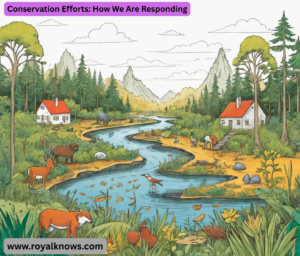
Conservation Efforts: How We Are Responding
- Conservation is the practice of protecting Earth’s biodiversity. Strategies operate at multiple levels:
Policy and International Agreements:
- Convention on Biological Diversity (CBD): A global commitment to conserve biodiversity, use its components sustainably, and share benefits fairly.
- CITES (Convention on International Trade in Endangered Species): An international agreement to ensure that trade in wild animals and plants does not threaten their survival.
- National Laws: Like the U.S. Endangered Species Act (ESA), which protects listed threatened and endangered species and their habitats.
Protected Areas:
- Establishing national parks, wildlife refuges, marine protected areas (MPAs), and wilderness areas to provide safe havens for Biodiversity and conservation efforts species and ecosystems.
Species-Specific Interventions:
- Captive Breeding and Reintroduction: Breeding endangered species in zoos and aquariums with the goal of releasing them into the wild (e.g., California condor, black-footed ferret).
- Wildlife Corridors: Creating strips of natural habitat that connect fragmented ecosystems, allowing animals to move, find mates, and maintain genetic diversity.
Community-Based Conservation:
- Involving local and indigenous communities in conservation efforts. These groups often have deep traditional knowledge and a vested interest in sustainably managing their natural resources (e.g., community-managed forests in Nepal).
Sustainable Practices:
- Promoting sustainable agriculture, forestry, and fishing to meet human needs without degrading the environment. Certifications like the Marine Stewardship Council (MSC) for seafood and the Forest Stewardship Council (FSC) for wood products help consumers make eco-friendly choices.
Technological and Scientific Solutions:
- Biodiversity and conservation efforts BioBlitzes: Intensive surveys to record all living species in a given area.
- Genetic Rescue: Introducing new genetic material to small, inbred populations to boost their health.
- Remote Sensing & AI: Using satellite imagery and artificial intelligence to monitor deforestation, track animal populations, and combat poaching.
What Can Individuals Do?
Everyone can contribute to conservation:
- Make Sustainable Choices: Reduce consumption, choose sustainable seafood and wood products, reduce single-use plastics.
- Support Conservation Organizations: Donate to or volunteer with reputable NGOs (e.g., World Wildlife Fund, The Nature Conservancy, local land trusts).
- Be a Responsible Tourist: Choose eco-tours that respect wildlife and support local communities.
- Advocate: Vote for leaders and policies that prioritize environmental protection.
- Educate and Connect: Learn about local biodiversity, create wildlife-friendly gardens, and share your knowledge with others.
Emerging Trends and Modern Approaches
- The field of conservation is constantly evolving, integrating new technologies and interdisciplinary approaches.
- Conservation Genetics: This field uses genetic information to make conservation decisions. It helps identify genetically distinct populations, understand inbreeding depression, and guide captive breeding programs to maximize genetic diversity.
- De-extinction: A highly controversial and theoretical field that explores using genetic engineering (e.g., cloning, CRISPR) to “bring back” extinct species like the woolly mammoth. Proponents argue it could restore ecological functions; critics argue it is costly, ethically fraught, and distracts from preventing extant extinctions.
Digital and Citizen Science:
Platforms like iNaturalist and eBird allow millions of people to contribute species observations, creating massive datasets that scientists use to track populations, distributions, and phenology (timing of natural events). This democratizes data collection.
- Climate-Informed Conservation: Conservation plans can no longer assume a stable climate. Strategies now include:
- Climate Corridors: Protecting and creating pathways for species to migrate to more suitable habitats as the climate changes.
- Managed Relocation (Assisted Migration): Actively moving species to new areas where they are predicted to survive future climate conditions.
- Conservation Biogeography: Using sophisticated mapping software (GIS) and satellite data to model species distributions, identify biodiversity hotspots, and plan protected area networks strategically.
- Focus on “Uncharismatic” Species: While flagship species (pandas, tigers) attract funding, there’s a growing push to conserve neglected taxa like fungi, invertebrates, and plants, which form the critical base of ecosystems.
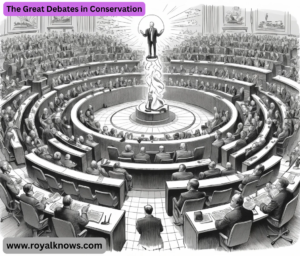
The Great Debates in Conservation
- Biodiversity and conservation efforts Conservation is not a monolithic field; it is filled with robust philosophical and practical debates.
Fortress Conservation vs. Community-Based Conservation:
- Fortress Conservation: The traditional model of creating protected areas from which humans are excluded. It has been criticized for displacing indigenous peoples and local communities and sometimes creating conflict.
- Community-Based Conservation: Emphasizes involving local communities as partners and beneficiaries. While often more ethical and sustainable, it can be complex to implement and may not always provide enough protection for highly endangered species.
- Triage: A Painful Reality: With limited resources, conservationists often must make difficult choices about which species or ecosystems to save. Do we prioritize the most endangered, the most evolutionarily distinct, or the ones that provide the most critical ecosystem services? This “conservation triage” is a sobering ethical dilemma.
- Invasive Species: A Nuanced View: The classic view is that all non-native invasives are bad and must be eradicated. However, some scientists argue for a more functional approach: as ecosystems change due to climate change, should we sometimes accept novel ecosystems and the species that form them if they are providing critical functions?
Land Sharing vs. Land Sparing:
- Land Sparing: intensifying agriculture on the smallest possible land footprint to leave larger, separate areas exclusively for nature.
- The debate centers on which strategy ultimately yields better outcomes for biodiversity.
Key Concepts to Know
- Ecosystem Services: A framework for quantifying the benefits nature provides to people, often in economic terms, to argue for conservation to policymakers.
- Their removal causes a cascade of changes (e.g., sea otters controlling sea urchin populations, which allows kelp forests to thrive).
- Umbrella Species: Protecting a wide-ranging species (like a tiger) indirectly protects the many other species that share its habitat.
- Examples include the Caribbean, Madagascar, and the Philippines.
The Positive Outlook: Reasons for HopeNature’s Resilience: Ecosystems can recover remarkably quickly when given a
- Biodiversity and conservation efforts chance.Nature’s Resilience: Ecosystems can recover remarkably quickly when given a chance.
- Despite the daunting challenges, there are success stories and powerful reasons for optimism:
- Documented Successes: Many species have been brought back from the brink of extinction through concerted effort, including:
- The Southern White Rhino (from a population of maybe 50 to over 15,000 today).
- The Humpback Whale (populations have rebounded significantly since the whaling moratorium).
- Global Awareness: Public awareness of issues like plastic pollution, deforestation, and climate change is higher than ever, creating political and corporate pressure for change.
Economic Shifts:
- The growth of the renewable energy sector, the circular economy, and sustainable investing (ESG) are aligning economic incentives with conservation goals.
- Indigenous Leadership: There is growing recognition that Indigenous Peoples, who manage over 25% of the world’s land area and safeguard 80% of its remaining biodiversity, are among the most effective stewards of nature. Supporting their land rights is a powerful conservation strategy.
- The restoration of rivers, the regrowth of forests, and the return of wildlife to protected areas show that decline is not always irreversible.
 xentro6@gmail.com