


Biomes Biomes are large-scale ecosystems characterized by distinct climate, flora, and fauna. Examples include forests, deserts, grasslands, tundras, and aquatic systems like oceans and freshwater habitats. Each biome adapts to environmental conditions such as temperature and precipitation, shaping biodiversity. Human activities, like deforestation and pollution, threaten biome stability, impacting global ecological balance and species survival.
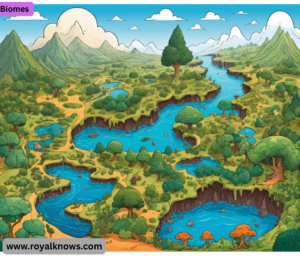
Major Terrestrial Biomes
Tropical Rainforest
- Climate: Hot and wet year-round.
- Flora: Dense canopy, tall trees, epiphytes.
- Fauna: Monkeys, toucans, jaguars, insects.
- Location: Amazon Basin, Congo Basin, Southeast Asia.
Savanna (Tropical Grassland)
- Climate: Warm with wet & dry seasons.
- Flora: Grasses, scattered trees (e.g., acacia).
- Fauna: Lions, elephants, zebras, giraffes.
- Location: Africa (Serengeti), South America, Australia.
Desert
- Climate: Very dry, extreme temperature shifts.
- Flora: Cacti, succulents, drought-resistant shrubs.
- Fauna: Camels, snakes, lizards, scorpions.
- Location: Sahara (Africa), Mojave (USA), Atacama (Chile).
Temperate Grassland (Prairie/Steppe)
- Climate: Moderate rainfall, hot summers, cold winters.
- Flora: Grasses, few trees.
- Fauna: Bison, wolves, prairie dogs.
- Location: Great Plains (USA), Eurasian Steppe, Pampas (Argentina).
Temperate Forest (Deciduous & Coniferous)
- Climate: Four distinct seasons, moderate rainfall.
- Flora: Deciduous trees (oak, maple) or conifers (pine, spruce).
- Fauna: Deer, bears, foxes, squirrels.
- Location: Eastern USA, Europe, East Asia.
Taiga (Boreal Forest)
- Climate: Long, cold winters; short, mild summers.
- Flora: Evergreen conifers (spruce, fir).
- Fauna: Moose, wolves, lynx, migratory birds.
- Location: Canada, Siberia, Scandinavia.
Tundra
- Climate: Very cold, low precipitation, permafrost.
- Flora: Mosses, lichens, dwarf shrubs.
- Fauna: Caribou, Arctic foxes, polar bears, snowy owls.
- Location: Arctic regions (Alaska, Canada, Russia).
Aquatic Biomes
- Freshwater (Rivers, Lakes, Wetlands)
- Features: Low salt concentration.
- Examples: Amazon River, Great Lakes.
- Marine (Oceans, Coral Reefs, Estuaries)
- Features: Saltwater, diverse ecosystems.
- Examples: Great Barrier Reef, Pacific Ocean.
Key Factors Influencing Biomes
- Latitude & Altitude: Affect temperature and sunlight.
- Precipitation: Determines plant growth.
- Soil Type: Influences vegetation.
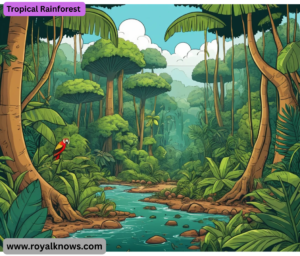
Tropical Rainforest
Layered Structure:
- Emergent Layer (tallest trees, up to 70m)
- Canopy Layer (dense foliage, most animals live here)
- Understory (shade-tolerant plants)
- Forest Floor (decomposing matter, fungi, insects)
Animal & Plant Adaptations:
- Buttress Roots: Trees have wide roots to support shallow soil.
- Epiphytes: Plants like orchids grow on trees to reach sunlight.
- Camouflage: Many insects and frogs mimic leaves or bark.
Threats:
- Deforestation (for logging, agriculture, palm oil).
- Climate Change (alters rainfall patterns).
Deert
Types of Deserts:
- Hot & Dry (Sahara, Sonoran)
- Cold Deserts (Gobi, Antarctica)
- Coastal Deserts (Atacama – driest place on Earth)
Survival Adaptations:
Plants:
- Cacti store water in stems.
- Deep roots tap underground water.
Animals:
- Nocturnal (active at night to avoid heat).
- Kangaroo rats get water from seeds.
Fun Fact:
- The Sahara Desert is expanding due to desertification (overgrazing, climate change).
Tundra
Two Types:
- Arctic Tundra (Northern Hemisphere)
- Alpine Tundra (high mountain regions)
Permafrost:
- A layer of permanently frozen soil that traps methane, a potent greenhouse gas.
Adaptations:
- Plants: Low-growing (to resist wind), short growing season.
- Animals: Thick fur (Arctic fox), hibernation (bears), migration (caribou).
Threats:
- Melting permafrost releases CO₂ and methane.
- Oil drilling disrupts fragile ecosystems.
Ocean Biome
Zones of the Ocean:
- Sunlit (Epipelagic) Zone – Most marine life (phytoplankton, fish, sharks).
- Twilight (Mesopelagic) Zone – Bioluminescent creatures (anglerfish).
- Midnight (Bathypelagic) Zone – Extreme pressure, little life.
- Abyssal Zone – Deep-sea vents, bizarre creatures (giant tube worms).
Coral Reefs:
- “Rainforests of the Sea” – High biodiversity.
- Threatened by bleaching (warming oceans), pollution, overfishing.
Taiga (Boreal Forest)
- Largest land biome (covers ~11% of Earth’s land).
Adaptations:
- Conifers (needle leaves reduce water loss).
- Snowshoe hares turn white in winter.
- Threats: Logging, oil extraction.
Conservation Efforts:
- Protected Areas (National Parks, Marine Reserves).
- Reforestation (planting trees in deforested areas).
- Sustainable Farming (rotational grazing in grasslands).
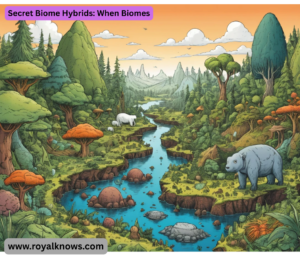
Secret Biome Hybrids: When Biomes Collide
- Some places defy classic biome classifications, creating rare transitional zones:
Mangrove Forests (Wetland + Ocean)
- Where? Tropical coastlines (Florida, Sundarbans, Indonesia).
Adaptations:
- Salt-filtering roots (some species excrete salt through leaves).
- Pneumatophores (snorkel-like roots for oxygen in muddy water).
- Key Role: Protects coasts from tsunamis and stores 10x more carbon than rainforests!
Cloud Forests (Rainforest + Mountain)
- Where? High-altitude tropics (Monteverde in Costa Rica, Andes).
- Unique Trait: Constant mist feeds plants directly (“fog drip”).
Bizarre Wildlife:
- Glass frogs (transparent skin).
- Resplendent quetzal (sacred bird of Mayans).
Mediterranean Scrub (Desert + Temperate Forest)
Where? California, Chile, Mediterranean Basin.
- Survival Tricks:
- Sclerophyll leaves (hard, waxy to resist drought).
- Fire-resistant seeds (some plants ONLY germinate after wildfires).
Extreme Adaptations: Nature’s Wildest Hacks
Desert Extreme: The “Resurrection Plant”
- Selaginella lepidophylla curls into a ball when dry, reviving after rain—can survive 50 years dormant!
Tundra Extreme: Anti-Freeze Blood
- Arctic fish (like the Antarctic toothfish) produce natural antifreeze proteins to survive -2°C waters.
Deep-Sea Extreme: Living in Acid
- Hydrothermal vent worms thrive in sulfur-rich, 400°C water near underwater volcanoes.
The Invisible Biome: MICROBIOMES
- Microscopic life defines ecosystems more than we realize:
Soil Microbiome
- 1 gram of soil = 40,000 bacterial species!
- Fungi networks (“Wood Wide Web”) let trees share nutrients underground.
Human Gut Biome
- Your gut bacteria affect your mood (via the gut-brain axis).
Extreme Microbes
- Radioresistant bacteria survive outer space (Deinococcus radiodurans).
- Endoliths live inside rocks in Antarctica’s dry valleys.
Lost Biomes: Prehistoric Ecosystems
Carboniferous Rainforests (300 million years ago)
- Giant insects (2.5-foot millipedes!) due to 35% oxygen levels (vs. 21% today).
- Formed Earth’s coal deposits from buried trees.
Pleistocene Megafauna Grasslands
- Mammoths, saber-tooths, and giant sloths kept grasslands open.
- Their extinction may have caused tundra expansion.
DIY Biome Experiment
- Want to see a mini-biome at home?
Make a Terrarium:
- Layer gravel (drainage) + soil + moss/fern.
- Add springtails (tiny cleanup crew).
- Seal it—it’s a self-sustaining rainforest!
- Pro Tip: Use a cactus + sand for a desert version.
The “Shadow Biomes” Scientists Almost Missed
Cryptic Ecosystems Hiding in Plain Sight
Canopy Soil Ecosystems
- Tropical tree crowns hold entire suspended soil systems (up to 1 ton per hectare)
Ice Caves of Antarctica
- Subglacial caves with permanent darkness maintain 25°C (77°F) from geothermal heat
- DNA evidence suggests unknown microbial ecosystems—possibly surviving 5 million years in isolation
Movile Cave (Romania)
- Sealed for 5.5 million years with sulfur-based food web
- 33 endemic species including water scorpions with no eyes
Biome Warfare: When Ecosystems Attack Each Other
The Silent Takeovers Happening Now
“Green Glacier” Invasion
- Taiga conifers are marching north at 100 meters/year, smothering tundra
- Result: Albedo effect reduction accelerates Arctic warming
Savannization of the Amazon
- Fire-resistant grasses from Africa (Melinis minutiflora) now dominate degraded areas
- Creates fire feedback loops that prevent forest recovery
Jellyfish Oceans
- Overfishing has triggered permanent jellyfish biome states in some seas
- Namibia’s coast now has jellyfish biomass 3x greater than fish
 xentro6@gmail.com