


Creative Rhythmic Movement Of course. Here is a piece on Creative Rhythmic Movement, exploring its essence, benefits, and how to practice it.

Creative Rhythmic Movement: The Poetry of the Body in Motion
- Creative Rhythmic Movement (CRM) is the art of expressing inner feelings, ideas, and narratives through the body’s movement, guided by an internal or external rhythm. It is not a prescribed dance style with set steps, but a fundamental human language—a way to communicate what words cannot. It is the joyful stomp of a child, the graceful sway of a tree in the wind, the powerful pulse of a community dance, and the quiet, mindful flow of a solitary practitioner.
- It is where creativity (the impulse to express) meets rhythm (the organizing pulse of time) through movement (our physical instrument).
The Core Elements
CRM is built on a simple but powerful fusion of three components:
- Creativity & Expression: This is the “why” of the movement. It’s about using the body to tell a story, convey an emotion (joy, anger, peace, conflict), or explore an idea (growth, collapse, connection). There is no “right” or “wrong,” only intention and authenticity.
- Rhythm & Music: This is the “when” of the movement. Rhythm provides the structure—the heartbeat that organizes the expression. It can come from:
- External Sources: Music of any genre, a drumbeat, the sound of rain, the ticking of a clock.
- Internal Sources: Your own heartbeat, your breath, a rhythmic pattern you create in your mind.
- Movement & Body: This is the “how” of the movement. It involves exploring all the ways the body can move through space and time:
- Body Parts: Isolating movements of the hands, head, hips, or feet.
- Qualities: Movement can be sharp or smooth, heavy or light, direct or indirect.
- Space: Using personal space (close to the body) or general space (moving around a room), moving at high, medium, or low levels.
- Energy: The force and dynamics behind a movement, from a powerful thrust to a gentle caress.
Why It Matters: The Benefits
Engaging in CRM is a holistic practice that benefits mind, body, and spirit.
- Physical: Improves coordination, balance, cardiovascular health, motor skills, and overall body awareness.
- Cognitive: Enhances neural connectivity, boosts memory (remembering sequences), fosters creativity and problem-solving (“how can I move to represent this sound?”).
- Emotional: Provides a powerful outlet for processing and releasing emotions. It can be cathartic, joyful, and a profound tool for building self-esteem and confidence.
- Social: When done in groups, it builds empathy, non-verbal communication, cooperation, and a powerful sense of connection and shared energy.
How to Explore Creative Rhythmic Movement
- You need no equipment, just a willingness to explore. Here are some ways to begin:
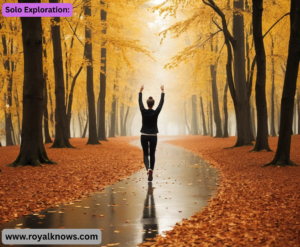
Solo Exploration:
- Start with Your Breath: Sit or stand comfortably. Close your eyes. Simply move in any way your breath inspires you to. Inhale to expand, exhale to contract. Let the rhythm of your breath be your music.
- Music as a Muse: Put on a piece of music without a strong cultural dance association (e.g., classical, world music, electronic). Don’t “dance” to it; listen and let your body respond instinctively to the rhythms, melodies, and emotions you hear.
- Imitate the World: Become a flickering flame, a rolling wave, a growing seed, a falling leaf. Use rhythm to give structure to your natural movement.
Guided Exercises:
- Mirroring: Partner with someone. One person leads with slow, rhythmic movements, and the other mirrors them exactly. This builds connection and empathy.
- Rhythm Circles: Sit in a circle. One person establishes a simple rhythmic movement (e.g., clap-clap-stomp). The next person mirrors it and adds a new movement, creating a growing pattern around the circle.
- Emotion Sculpts: A caller names an emotion (e.g., “Joy!” “Frustration!” “Serenity!”). The movers express that emotion through frozen shapes or continuous rhythmic movement for a set time, then reset.
For Educators and Facilitators:
- Use Storytelling: “We are going on a journey through a jungle. Listen to the drum—when it’s slow, we are tiptoeing past a sleeping tiger. When it’s fast, we are quickly crossing a shaky bridge!”
- Provide Props: Scarves, ribbons, stretchy bands, and percussion instruments can inspire new ways of moving rhythmically.
- Create a Safe Space: The most important rule is that there is no wrong way to move. Encourage participation, not performance.
A Simple Sequence to Try
- Find Your Pulse: Stand with eyes closed. Find your heartbeat in your wrists or chest. Begin to gently pulse your knees to that rhythm.
- Grow the Movement: Let that pulse travel to your hips, then your arms, then your head.
- Add Music: Put on a song with a clear beat. Let your body find the “1” and just move on that beat in any way it wants—a step, a nod, a hand clap.
- Play with Space: Now, travel across the room on that beat. Change your level—go low for 8 counts, then high for 8 counts.
- Cool Down: As the music fades, let your movements become smaller and slower, returning to the gentle pulse of your knees and finally to stillness.
The Layers of Creative Rhythmic Movement
- Think of CRM as existing on a spectrum, from simple, instinctive movement to complex, collaborative art.
The Personal Layer (Intrapersonal):
- This is the most fundamental level—a conversation between you and the rhythm. It’s a form of moving meditation, a way to process your inner state. A person swaying alone in their kitchen to a song that resonates with their mood is engaging in this layer. It’s about self-discovery and release.
The Collaborative Layer (Interpersonal):
- This is the social dimension. When movement and rhythm are shared, they become a powerful tool for non-verbal communication and building community. Think of:
- Circle Dances: Found in cultures worldwide, from Greek Syrtos to African ring dances.
- Flash Mobs: A modern, organized example of shared rhythmic expression in a public space.
- Contact Improvisation: A dance form where partners move in contact, using shared weight and momentum, constantly listening to each other’s rhythms through touch.
This layer is about connection and empathy.
The Performative Layer (Artistic-Interpretive):
- This is where CRM is shaped with an audience in mind. Professional dance theatre companies like STOMP or Pilobolus are masterful examples. They use everyday objects and their bodies to create complex rhythms and visual poetry, telling stories without words. This layer is about communication and shared experience.
Expanding the Toolkit: The “How-To” with More Depth
Here are more structured ways to explore CRM, focusing on different elements.
Exercise 1: Exploring Movement Qualities with Rhythm
This exercise uses the Laban Movement Analysis framework to add vocabulary to your movement.
- Time: Is the movement Sustained (slow, smooth, drawn-out) or Sudden (quick, sharp, abrupt)?
- Weight: Is the movement Strong (powerful, heavy, forceful) or Light (delicate, gentle, airy)?
- Space: Is the movement Direct (focused, straight to a point) or Indirect (flexible, meandering, dreamy)?

How to practice:
- Choose a simple, constant rhythm (a metronome set to 80 BPM or a drumbeat).
- For 8 counts, move only with Sudden movements. Hit every beat sharply.
- For the next 8 counts, switch to Sustained movements, flowing smoothly through the beats.
- Now, combine. Do 4 counts of Strong, Sudden movements, followed by 4 counts of Light, Sustained movements.
- Experiment with all combinations. What does a Direct + Strong + Sudden movement look like? (A punch). What does an Indirect + Light + Sustained movement look like? (A feather floating on a breeze).
Exercise 2: Narrative Rhythm Journey
Create a movement story guided by a changing soundtrack.
- The Soundtrack: Create a playlist or have a live drummer guide you through these stages:
- The Seed (Slow, Sustained Rhythms): You are a seed underground. Begin in a small ball. To a slow drumbeat, begin to grow, unfurling with slow, sustained movements.
- The Storm (Fast, Chaotic Rhythms): The rhythm becomes fast, loud, and chaotic. You are a tree in a storm. How do you move? Do you resist? Do you flow with the wind?
- The Calm (Steady, Heartbeat Rhythm): The storm passes. The rhythm returns to a steady, calm pulse. You are resilient, moving with a sense of peace and recovery.
- The Celebration (Joyful, Complex Rhythms): The sun comes out. The rhythm becomes lively and celebratory (e.g., a samba or funk beat). Your movements become joyful, expressive, and energetic.
Exercise 3: Object-Based Rhythm
Use a prop to discover new movements and sounds.
- Prop: A scarf, a ball, a stretchy band, or even a chair.
- Task: Explore all the ways you can move with and because of the object in rhythm.
- Scarf: Can you make it float on 4 slow counts? Can you snap it sharply on a single beat? Can you swirl it in a figure-eight pattern to a waltz rhythm?
- Chair: Can you create a rhythm by tapping its feet? Can you use it as a support for leaning, circling, and pausing? This is the foundation of dances like the Mexican La Raspa or musical theatre numbers.
The Role of a Facilitator: Creating the Container
For those looking to guide others, your role is not to teach steps but to create a safe container for exploration.
- Focus on Invitation, not Instruction: Use open-ended prompts. “Explore how your spine can move to this rhythm,” instead of “swing your hips like this.”
- Embrace the “Yes, And…” Principle: In group work, encourage building on each other’s ideas. If one person creates a movement, the next person mirrors it and adds their own, creating a collaborative movement phrase.
- Use Silence: Sometimes, turn off the music. Have the group discover the rhythm of their own breath, their collective footsteps, or the sound of their hands clapping together. This builds deep listening skills.
 xentro6@gmail.com