


Emerging Diseases and Antibiotic Resistance Of course. This is a critical and complex topic in modern medicine and public health. Here is a detailed overview of emerging diseases and antibiotic resistance, covering their definitions, connections, causes, and potential solutions.
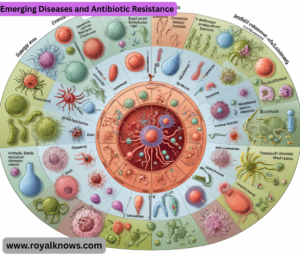
What are Emerging and Re-emerging Infectious Diseases?
- Emerging Diseases: These are infectious diseases that have newly appeared in a population or have existed but are rapidly increasing in incidence or geographic range.
- Examples: COVID-19 (SARS-CoV-2), HIV/AIDS, Ebola, Zika virus, H1N1 influenza, Lyme disease.
- Re-emerging Diseases: These are diseases that were once major health problems and then declined dramatically, but are now experiencing a resurgence.
- Examples: Tuberculosis, Malaria, Cholera, Whooping cough (Pertussis).
The Crisis of Antibiotic Resistance (AMR)
- Antibiotic resistance occurs when bacteria and other microbes evolve mechanisms to survive exposure to the drugs designed to kill them. These resistant microbes are often called “superbugs.”
- It’s Not “Body Resistance”: It’s important to understand that it’s the bacteria that become resistant, not the person or animal.
- The Stakes: AMR makes standard treatments ineffective, infections persist and spread to others, and routine medical procedures (like surgery, chemotherapy, and C-sections) become much more dangerous.
The Crucial Link Between the Two Issues
- Emerging diseases and antibiotic resistance are deeply interconnected, creating a vicious cycle that threatens global health.
- New Diseases Create New Demand for Antibiotics: When a novel pathogen emerges (e.g., a new virus), it often causes secondary bacterial pneumonia as a major complication. This was a primary cause of death in both the 1918 flu pandemic and COVID-19. This leads to massive use of antibiotics, driving resistance.
- Resistance Can Make Re-emerging Diseases Deadlier: Diseases like Tuberculosis (TB) are becoming nearly untreatable due to the rise of Multi-Drug Resistant TB (MDR-TB) and Extensively Drug-Resistant TB (XDR-TB), effectively turning a curable disease back into a fatal one.
- Hospital-Acquired Infections (HAIs): Hospitals are ground zero for resistant bacteria (e.g., MRSA, VRE, CRE). An emerging disease that overwhelms hospitals (like COVID-19) puts more vulnerable people in contact with these superbugs.
- Diversion of Resources: A pandemic response can divert attention, funding, and public health resources away from ongoing AMR surveillance and control programs.
Drivers and Causes
For Emerging Diseases:
- Zoonotic Spillover: ~75% of emerging diseases come from animals (zoonoses). This is driven by:
- Deforestation and habitat encroachment.
- Wildlife trade and wet markets.
- Agricultural intensification (bringing animals and humans closer).
- Globalization and Travel: A pathogen can travel from a remote village to a major city on another continent in less than 24 hours.
- Climate Change: Alters the geographic range of vectors (like mosquitoes and ticks), spreading diseases like Dengue, Zika, and Lyme to new regions.
- Human Demographics and Behavior: Urbanization and crowded cities facilitate spread.
For Antibiotic Resistance:
- Misuse and Overuse in Human Medicine: Prescribing antibiotics for viral infections (like colds or flu) where they are ineffective.
- Patient Non-Compliance: Not finishing a full course of antibiotics kills the weak bacteria but allows the strongest ones to survive and multiply.
- Overuse in Agriculture: Widespread use in livestock for growth promotion and disease prevention (often in healthy animals) is a massive driver of resistance.
- Lack of New Antibiotics: The antibiotic development pipeline is dry. Developing new drugs is scientifically challenging and not financially attractive for pharmaceutical companies compared to chronic disease medications.
Consequences and Threats
- Prolonged Illness and Increased Healthcare Costs: Longer hospital stays, more expensive and toxic second-line drugs, and more intensive care are required.
- Threat to Modern Medicine: The safety of procedures that rely on effective antibiotics—organ transplants, chemotherapy, hip replacements, and cesarean sections—is compromised.
- Economic Damage: The World Bank estimates AMR could cause as much economic damage as the 2008-2009 global financial crisis.
Solutions and The Way Forward
- Invest in genomic sequencing to track outbreaks and resistance genes in real-time.
Stewardship and Prevention:
- Antibiotic Stewardship Programs: Promote the rational use of antibiotics in both healthcare and agriculture.
- Infection Prevention: Improve hygiene, sanitation, and vaccination rates.
Investment and Innovation:
- New Antibiotics: Create new financial incentives (e.g., push funding, market entry rewards) for pharma companies to develop novel antibiotics and alternatives.
- Alternatives to Antibiotics: Invest heavily in research for:
- Phage Therapy: Using viruses that infect and kill specific bacteria.
- Monoclonal Antibodies: Designer antibodies that target pathogens.
- Probiotics and Microbiome Therapies: Harnessing the body’s natural microbes to fight infection.
Global Cooperation:
- This is a borderless threat. Organizations like the WHO (World Health Organization), FAO (Food and Agriculture Organization), and OIE (World Organisation for Animal Health) must be empowered to coordinate international action, data sharing, and support for low-resource countries.
Deep Dive: Notorious Pathogens Illustrating the Crisis
Case Studies in Emerging Diseases with Resistance Potential
- Its origin is mysterious, appearing simultaneously on three different continents.
- Why it’s dangerous: It’s often resistant to all three major classes of antifungal drugs. It persists on surfaces in healthcare settings for weeks, causing severe invasive infections in vulnerable patients with a high mortality rate (~30-60%).
- Link to Resistance: Its emergence is heavily linked to the overuse of fungicides in agriculture, which created environmental pressure that may have selected for its pan-resistant traits.
- The “Nightmare Bacteria”: Often dubbed this by health officials. Infections with CRE can be untreatable and fatal in up to 50% of patients.
- Mechanism: They produce enzymes (carbapenemases) that break down the antibiotic molecules. The gene for this enzyme can be shared between different bacteria on plasmids (small loops of DNA), accelerating the spread of resistance.
Case Studies in Re-emerging & Resistant Diseases
- Drug-Resistant Tuberculosis (DR-TB): The epitome of a re-emerging disease supercharged by resistance.
- Scale: TB remains one of the world’s deadliest infectious diseases. MDR-TB and XDR-TB require treatment regimens that are incredibly prolonged (18+ months), expensive, and toxic, with severe side effects like permanent hearing loss and psychosis.
- The Challenge: Diagnosing resistance is complex, and the long treatment course makes it difficult for patients to adhere to it, further driving resistance.
- Drug-Resistant Malaria: Primarily Plasmodium falciparum resistance to artemisinin-based combination therapies (ACTs) in Southeast Asia.
- Significance: ACTs are the cornerstone of modern malaria treatment. The emergence and spread of resistance threaten to roll back decades of progress in malaria control, potentially causing a massive resurgence of the disease.
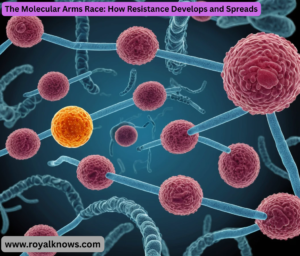
The Molecular Arms Race: How Resistance Develops and Spreads
- Resistance is a natural evolutionary process, but human activity has accelerated it dramatically. Bacteria use several ingenious methods:
- Mutation: Random changes in the bacterial DNA can alter the target of the drug, preventing the antibiotic from binding effectively.
- Horizontal Gene Transfer (HGT): This is the most alarming method. Bacteria can share resistance genes with other, sometimes unrelated, bacteria. They do this through:
- Transposons (“Jumping Genes”): DNA sequences that can move from one location to another within a genome or even to a different genome.
- This means resistance can spread rapidly through a bacterial population and even jump between species.
- Efflux Pumps: Bacterial proteins that act like bilge pumps, recognizing and actively pumping out antibiotics before they can do any harm.
- Enzymatic Inactivation: Bacteria produce enzymes (like beta-lactamases) that chemically degrade the antibiotic, rendering it useless.
Beyond Antibiotics: The Frontier of Alternative Strategies
Emerging Diseases and Antibiotic Resistance Since the antibiotic pipeline is slow, researchers are pursuing novel, complementary approaches:
- Phage Therapy: Using bacteriophages—viruses that specifically infect and lyse (burst) certain strains of bacteria. They are highly specific, reducing collateral damage to the beneficial microbiome.
- CRISPR-Cas Systems: Harnessing the gene-editing tool to target and destroy antibiotic resistance genes within bacterial populations or to re-sensitize bacteria to existing drugs.
- Anti-Virulence Therapies: Instead of killing the bacteria, these drugs disarm them. They target the toxins or mechanisms the bacteria use to cause disease (virulence factors), rendering them harmless and allowing the immune system to clear the infection. This creates less selective pressure for resistance.
- Monoclonal Antibodies (mAbs): Lab-engineered antibodies designed to neutralize specific bacterial toxins or pathogens.
- Microbiome Modulation: Using probiotics, prebiotics, or even fecal microbiota transplants (FMT) to restore a healthy gut microbiome, which can outcompete and resist colonization by pathogenic bacteria.
The “One Health” Approach in Action
This isn’t just a theory; it’s a practical framework for solutions:
- Human Health Sector: Implementing strict antibiotic stewardship programs in hospitals and clinics. Promoting vaccination (e.g., flu vaccine reduces secondary bacterial infections and thus antibiotic use).
- Requiring veterinary prescriptions for antibiotics used in sick animals. Improving animal husbandry and hygiene to prevent infections in the first place.
- Environmental Sector: Monitoring wastewater from hospitals and farms for resistant genes and novel pathogens. Regulating the discharge of antibiotics from pharmaceutical manufacturing plants.
 xentro6@gmail.com