


Mark rutte Mark Rutte is a Dutch politician who has been the Prime Minister of the Netherlands since October 14, 2010. He is a member of the People’s Party for Freedom and Democracy (VVD), a center-right liberal party. Rutte is known for his pragmatic leadership style and has become one of the longest-serving prime ministers in Dutch history.

Early Life & Career:
- Studied history at Leiden University and briefly worked as a teacher before entering politics.
- Held roles in business (Unilever) before becoming a full-time politician.
Political Rise:
- Entered parliament in 2003 and became State Secretary for Social Affairs and Employment (2002–2004).
Leader of the VVD since 2006.
- Became Prime Minister in 2010 after a coalition agreement following a fragmented election.
Prime Ministership:
- Led multiple coalition governments, often with centrist or right-leaning parties.
- Known for his consensus-building approach (“Teflon Mark” for surviving political scandals).
- Navigated challenges like the Eurozone crisis, migration debates, and the COVID-19 pandemic.
- Resigned in July 2023 after his fourth coalition government collapsed over immigration policy disagreements, but remained in a caretaker role.
International Role:
- Played a key role in EU politics, advocating fiscal conservatism but supporting Ukraine strongly after Russia’s 2022 invasion.
- In 2023, he announced his departure from Dutch politics and was later selected as NATO’s next Secretary-General (set to take office in October 2024).
Personal Style:
- Known for his modest lifestyle (bikes to work, lives in a small apartment).
- Often seen as approachable and media-savvy, with a reputation for pragmatic problem-solving.
Early Life & Background
- Full Name: Mark Rutte (born 14 February 1967, The Hague, Netherlands).
- Education: Studied History at Leiden University (1984–1992), specializing in post-war European integration.
Early Career:
- Worked as a history teacher (1992–1997).
- Joined Unilever (HR manager, 1997–2002).
- Entered politics as State Secretary for Social Affairs (2002–2004) under PM Jan Peter Balkenende.

2. Political Ascension
- 2003: Elected to the Dutch House of Representatives (Tweede Kamer).
- 2010 General Election: After the fall of Balkenende’s government, Rutte led the VVD to victory, becoming Prime Minister in a minority coalition with the Christian Democratic Appeal (CDA) and supported by Geert Wilders’ PVV.
3. Prime Minister of the Netherlands (2010–2024)
- Rutte served four consecutive terms, making him the longest-serving Dutch PM in history
Key Governments & Coalitions:
- First Cabinet (2010–2012): VVD + CDA (supported by PVV) – collapsed over austerity budget disagreements.
- Second Cabinet (2012–2017): VVD + Labour Party (PvdA) – focused on economic recovery post-2008 crisis.
- Fourth Cabinet (2022–2023): Same coalition, collapsed in July 2023 over asylum policy disputes.
Major Policies & Controversies:
Economic Policies:
- Austerity measures post-2008 crisis.
- Tax cuts for businesses, pension reforms.
- Strong fiscal discipline in the EU (opposed joint Eurobonds).
Social Policies:
- Supported LGBTQ+ rights (same-sex marriage, transgender laws).
- But faced criticism for slow action on inequality and housing crisis.
Immigration & Far-Right Pressure:
- Initially moderate, but shifted rightward under pressure from Geert Wilders (PVV).
- 2023 collapse: Coalition split over limiting family reunification for refugees.
COVID-19 Response:
- Imposed lockdowns, faced anti-lockdown riots (2021).
- Later apologized for harsh measures (e.g., curfews).
Foreign Policy:
- Strong pro-Ukraine stance (military aid, F-16s).
- EU Influence: Fiscal hawk but backed EU sanctions on Russia.
- China Policy: Took a tougher stance on semiconductor exports (ASML).
4. Leadership Style & Public Image
Nicknames:
- “Teflon Mark” – Scandals rarely stuck to him.
- Personality: Pragmatic, avoids ideology, master of “doorstepping” (informal press talks).
Criticism:
- Seen as too flexible (no clear long-term vision).
5. Resignation & NATO Leadership
- July 2023: Government collapsed, remained as caretaker PM.
- 2024: Announced retirement from Dutch politics.
6. Fun Facts & Trivia
- Plays the piano (classical music fan).
- Never married, no children.
- Once worked part-time at a supermarket as a student.
- Known for carrying his own umbrella (unlike bodyguarded leaders).
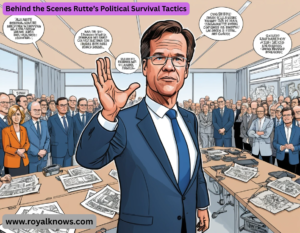
Behind the Scenes: Rutte’s Political Survival Tactics
Why Was He Called “Teflon Mark”?
- Survived multiple scandals without lasting damage:
- Childcare Benefits Scandal (Toeslagenaffaire, 2021) – Thousands of families wrongly accused of fraud; Rutte’s government resigned but he stayed as PM.
- PVV Collapse (2012) – Wilders withdrew support, but Rutte formed a new coalition within months.
- Lying Allegations (2021) – Accused of misleading parliament about coalition talks; he apologized but kept power.
- Tactic: Always “I don’t recall” in hearings, combined with charm and quick apologies.
How Did He Stay in Power So Long?
- Mark rutte Master of Coalition Politics – The Netherlands has no majority parties, so Rutte became a deal-maker, even with rivals.
- Example: Partnered with Labour (left) in 2012, then Christian Union (conservative) in 2017.
- “Rutte Doctrine” – Avoid ideological fights; focus on practical solutions (e.g., “just solve the damn problem” attitude).
- Media Savvy – Used informal “doorstepping” (impromptu press chats) to control narratives.
8. Rutte vs. Geert Wilders: A 20-Year Rivalry
- Wilders (far-right PVV) was Rutte’s biggest opponent but also an occasional ally.
Key Moments:
- 2010: Rutte relied on PVV support for his first government (Wilders later pulled out).
- 2017: Rutte hardened his stance on immigration after Wilders nearly won the election.
- 2023: Rutte’s government collapsed because he tried to restrict refugee family reunification—Wilders still attacked him as “too soft.”
9. The Bicycle PM: Rutte’s Deliberately “Normal” Image
No VIP Lifestyle:
- Lives in a small apartment (no official residence).
- Rides a second-hand Saab (until it broke down).
- No security detail at supermarkets (once filmed buying bitterballen alone).
- Why It Worked: In a country that hates elitism, Rutte seemed like an “ordinary guy.”
10. Controversial Decisions & Criticism
A. Climate Change Slowdown
- Netherlands sued for weak climate policies (Urgenda case, 2019).
- Rutte delayed shutting coal plants (protecting business interests).
- Farmers’ protests (nitrogen crisis) erupted under his watch.
B. Housing Crisis
- Rent prices soared; Rutte’s governments cut social housing budgets.
- Critics say he favored landlords over young renters.
C. Tax Scandals
- Multinationals (like Shell) got tax breaks, while citizens faced higher healthcare costs.
11. Rutte’s NATO Challenge (2024– )
Why NATO Chose Him:
- Mark rutte Pro-Ukraine, pro-US, but acceptable to Turkey/Hungary.
- Experience in EU negotiations.
Biggest Tests:
- Trump’s possible return (will Rutte convince him on NATO funding?).
- War in Ukraine (how to handle NATO expansion?).
12. What the Dutch Really Think of Him
- Supporters: Praise his stability, humor, and crisis management.
- Critics: Call him “the king of empty promises” (e.g., on climate, inequality).
- Exit Polls (2023): Many were tired of him after 13 years—but no obvious successor emerged.
13. Rutte’s Unusual Personal Traits
- Piano Passion: Plays Chopin and Beethoven to relax.
- No Smartphone: Prefers face-to-face talks (rare for a modern leader).
- Food Habits: Loves Dutch licorice (drop) and simple sandwiches.
The “Rutte School” – How He Trained a Generation of Dutch Leaders
- Rutte didn’t just lead—he created a political style that defined Dutch politics for over a decade:
“The Rutte Method”:
- Rule 1: Never show panic. (During crises, he’d famously say: “Let’s just keep talking.”)
- Rule 2: Always leave room to backtrack. (His go-to phrase: “I have no active memory of that.”)
- Rule 3: Make opponents think they won, even when they didn’t.
His Protégés:
- Wopke Hoekstra (ex-CDA, now EU climate chief) – Learned coalition tactics from him.
Get article on pdf file….Click now
…..Mark rutte.…..
 xentro6@gmail.com