


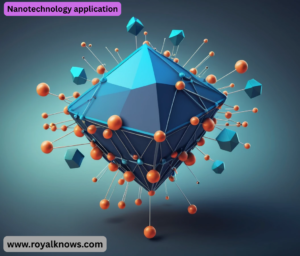
Nanotechnology application Of course. Nanotechnology, the manipulation of matter on an atomic and molecular scale (typically 1 to 100 nanometers), is not a single technology but a vast field with applications revolutionizing nearly every industry. Here is a comprehensive overview of nanotechnology applications, categorized by sector.
Medicine & Healthcare (Nanomedicine)
This is one of the most promising and advanced areas.
- Drug Delivery: Nanoparticles can be engineered to deliver drugs directly to diseased cells (e.g., cancer cells), minimizing damage to healthy tissue. This improves efficacy and reduces side effects. Examples include liposomes and polymer-based nanoparticles.
- Diagnostics: Nanobiosensors can detect diseases like cancer or infectious agents at a very early stage from a small blood sample. Quantum dots are used for highly precise medical imaging.
- Theranostics: A combination of therapy and diagnostics. Nanoparticles are designed to both identify diseased areas (e.g., make a tumor glow) and deliver treatment to that specific spot.
- Antibacterial Treatments: Nanoparticles of silver (nano-silver) and other metals have potent antibacterial properties and are used in wound dressings, coatings for medical devices, and even in textiles.
- Regenerative Medicine: Nanoscaffolds are structures that mimic the body’s natural extracellular matrix. They are used to guide and stimulate the growth of new tissue, such as bone, cartilage, or nerves.
Electronics & Computing
- Nanotechnology application Nanotech is the driving force behind the continued advancement of electronics (following Moore’s Law).
- Smaller, Faster Processors: Transistors and other components are now built at the nanoscale, allowing for more powerful and energy-efficient computer chips.
- Memory Storage: Nanotechnology enables incredibly dense memory storage devices. For example, racetrack memory and other novel designs could store terabytes of data in a tiny space.
- Flexible Electronics: Nanowires and graphene (a one-atom-thick sheet of carbon) are used to create flexible, transparent, and unbreakable displays for phones, TVs, and wearable devices.
- Quantum Computing: Many quantum computing approaches rely on controlling quantum states of individual atoms or nanoparticles (quantum dots).
Energy
- Nanotech is key to developing cleaner and more efficient energy solutions.
- Solar Cells: Nanoparticles and nanostructured films (e.g., perovskite solar cells) can dramatically increase the efficiency of converting sunlight to electricity and lower production costs.
- Batteries & Supercapacitors: Nanomaterials like graphene and carbon nanotubes are used to create electrodes that charge faster, hold more energy, and last for more charge cycles. This is crucial for electric vehicles and grid storage.
- Fuel Catalysts: Nanoparticles act as highly efficient catalysts in fuel cells, breaking down fuels to generate electricity with less waste and lower platinum content, reducing cost.
- Energy Efficiency: Aerogel, a nanostructured material, is one of the best insulators known and is used in buildings and industrial applications to reduce energy loss.
Materials & Manufacturing
- Nanotech creates materials with fundamentally new properties.
- Stronger, Lighter Materials: Carbon nanotubes and graphene are hundreds of times stronger than steel at a fraction of the weight. They are being incorporated into composites for aerospace, automotive, and sports equipment.
Smart Coatings:
- Self-Cleaning: Surfaces coated with nanoparticles (e.g., TiO₂) break down dirt and grime when exposed to light, and water beads right off (superhydrophobic).
- Scratch-Resistant: Nanoscale additives make paints and coatings incredibly durable.
- Anti-Fog: Nanocoatings on glasses or car mirrors prevent condensation.
- Nanoparticles in Consumer Goods: Used in cosmetics (sunscreens with ZnO nanoparticles), stain-resistant and odor-resistant clothing, and even in food packaging to improve freshness and prevent bacterial growth.
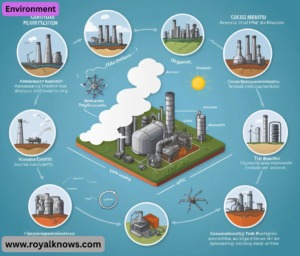
Environment
- Nanotechnology application Nanotechnology offers tools for remediation and protection.
- Water Purification: Nanomembranes with tiny pores can filter out viruses, bacteria, and heavy metals (e.g., arsenic) more effectively than traditional methods. Nanomaterials can also catalyze reactions to break down toxic pollutants in water.
- Air Purification: Similar to water, catalytic nanoparticles can be used in air filters to break down volatile organic compounds (VOCs) and other airborne pollutants from industrial emissions.
- Environmental Sensing: Highly sensitive nanosensors can be deployed to detect trace levels of pollutants, chemical agents, or pathogens in the air, soil, or water in real-time.
Other Applications
- Food Industry: Nanosensors for detecting pathogens and contaminants, nano-encapsulates to deliver nutrients or flavors, and packaging that changes color if food spoils.
- Textiles: Fabrics engineered to be water-repellent, stain-resistant, anti-static, or with integrated nanomaterials to monitor vital signs (smart clothing).
- Space Exploration: Lightweight nanocomposites for spacecraft, advanced radiation shielding using nanomaterials, and highly efficient nano-sensors for planetary exploration.
Challenges and Considerations
- The power of nanotechnology also brings concerns that are actively being researched:
- Toxicity & Health Impact: The interaction of engineered nanoparticles with biological systems is not fully understood. Their small size allows them to cross biological barriers (e.g., blood-brain barrier), which could be beneficial for medicine but risky if unintended.
- Environmental Impact: The long-term effect of nanoparticles released into the environment (e.g., through washed-off textiles) on ecosystems is a subject of ongoing study.
- Ethical and Societal Issues: Concerns about privacy (with nano-sensors), economic disruption, and potential military applications (e.g., nano-weapons) require public discourse and regulation.
The “Why”: What Makes Nanoscale So Special?
- At the nanoscale (1-100 nanometers), materials often exhibit properties that are drastically different from their bulk counterparts. This is due to two main factors:
- Increased Surface Area to Volume Ratio: As a particle gets smaller, the proportion of atoms on its surface skyrockets compared to the atoms inside. This makes nanomaterials incredibly reactive and catalytic.
- This can change how a material interacts with light, electricity, and magnetism. For example, quantum dots can be tuned to emit any color of light just by changing their size.
Deep Dive into Specific Applications
Medicine: The Nano-Surgeon Within
- Gold Nanoshells for Cancer Therapy: Imagine injecting a patient with tiny silica spheres coated with a thin layer of gold. Nanotechnology application These nanoshells are designed to accumulate in tumors through their leaky blood vessels. Then, a doctor applies near-infrared light from outside the body. The light passes harmlessly through healthy tissue but is absorbed by the gold nanoshells, heating them up and selectively cooking the cancer cells. This is hyperthermia therapy with precision.
- Nanobubbles for Drug Delivery: Researchers are creating liposomes (fat-based nanoparticles) filled with a drug and a small amount of gas. When these “nanobubbles” reach their target and are hit with ultrasound, the gas expands, rupturing the bubble and releasing the drug exactly where it’s needed. The ultrasound can also be used to image the bubbles, making it another theranostic platform.
- Spider Silk Nanofibers: Genetically engineered spider silk is biocompatible and incredibly strong. It’s being used to create nanoscale scaffolds to guide nerve regeneration, potentially helping to repair spinal cord injuries.
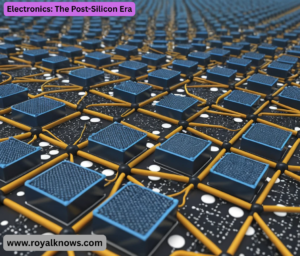
Electronics: The Post-Silicon Era
- Memristors: These are nanoscale electronic components that “remember” their electrical resistance even after power is turned off. They are a fundamental building block for neuromorphic computing—creating computer chips that mimic the neural structure of the human brain, leading to vastly more efficient AI processing.
- 2D Materials Beyond Graphene: While graphene (a single layer of carbon atoms) gets much attention, other 2D materials like molybdenum disulfide (MoS₂) are emerging. These materials are just a few atoms thick and are excellent semiconductors, potentially replacing silicon in ultra-thin, flexible transistors.
- Nanotechnology application Carbon Nanotube (CNT) Transistors: CNTs are sheets of graphene rolled into tubes. They conduct electricity better than copper and can outperform silicon.
Energy: Harvesting and Storing at the Nanoscale
- Quantum Dot Solar Cells: Traditional silicon solar cells have a maximum theoretical efficiency. . This allows scientists to create multi-junction solar cells that capture a much broader spectrum of sunlight, potentially shattering efficiency records.
- Nano-Engineered Catalysts for Hydrogen: Splitting water to produce green hydrogen fuel requires efficient catalysts.
Environment: Nano-Cleanup Crew
- Nano-Zero Valent Iron (nZVI): This is a powerful example of nano-remediation. Tiny particles of iron are injected into contaminated groundwater.
- Photocatalytic Nanofilters: Filters coated with titanium dioxide (TiO₂) nanoparticles don’t just trap pollutants; they destroy them. This is used in air purifiers and water treatment systems.
The Future and Ethical Frontier
- Nanotechnology application Looking ahead, nanotechnology is converging with other fields like artificial intelligence, biotechnology, and robotics. This is leading to concepts like:
- The concept of tiny, autonomous machines that could perform surgery from inside the body, break down blood clots, or precisely assemble tissue.
- Developing nanomaterials with safety in mind from the very beginning of the design process.
- Lifecycle Analysis: Thoroughly studying the entire lifecycle of a nano-product, from manufacture to disposal, to understand its environmental impact.
 xentro6@gmail.com