

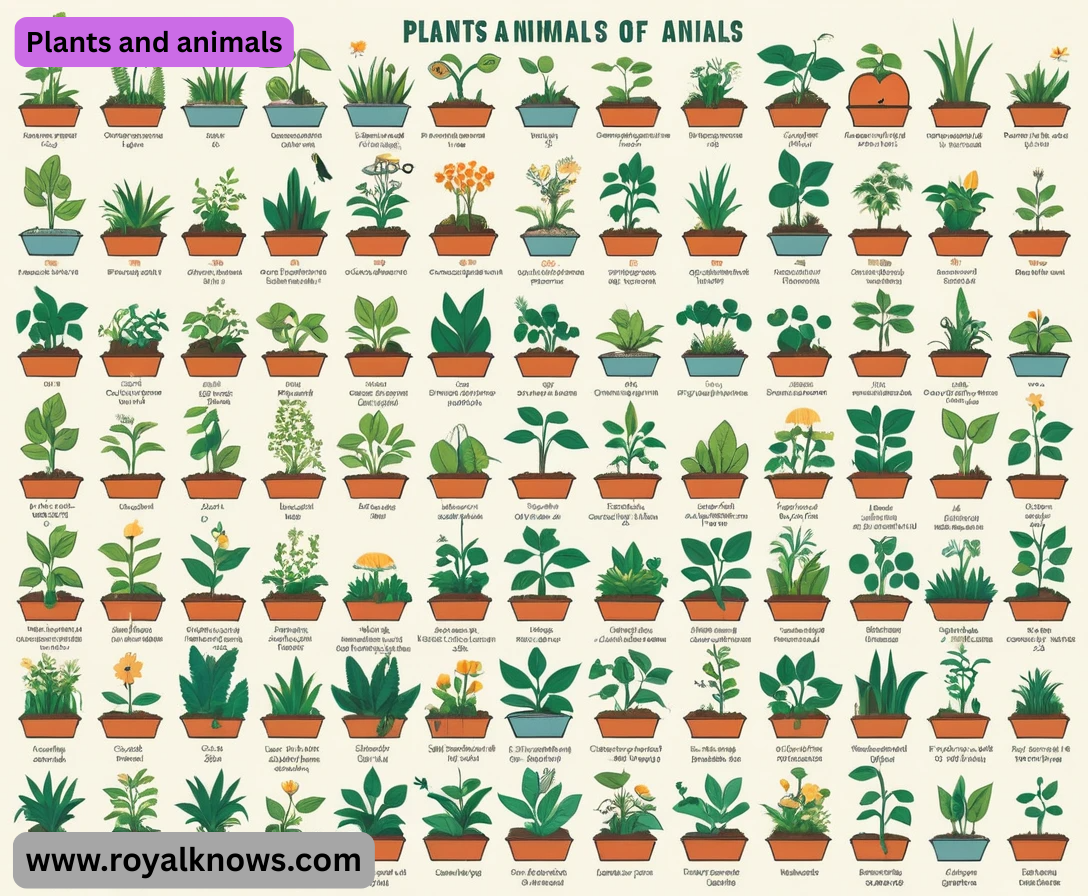
Plants and animals Of course. The relationship and differences between plants and animals are fundamental to life on Earth. Here’s a comprehensive overview.
The Core Difference: How They Get Energy
The most fundamental distinction is how they obtain energy.
- Plants (Autotrophs): They are “self-feeders.” Through the process of photosynthesis, they use sunlight, water, and carbon dioxide to create their own food (sugars like glucose).
- Animals (Heterotrophs): They are “other-feeders.” They must consume other living things (plants or other animals) to get the energy and organic compounds they need to survive.
The Oxygen-Carbon Dioxide Cycle:
- Animals breathe in oxygen (O₂) and exhale carbon dioxide (CO₂).
- Plants take in CO₂ for photosynthesis and release O₂ as a byproduct.
- This creates a perfect, balanced gas exchange that sustains life on the planet.
The Food Chain Foundation:
- Plants are primary producers. They form the base of nearly every food chain, converting the sun’s energy into a form that animals can use.
- Herbivores (primary consumers) eat plants. Carnivores (secondary consumers) eat herbivores, and so on.
Pollination and Seed Dispersal:
- Many plants rely on animals (bees, birds, bats, insects) to transfer pollen between flowers, enabling reproduction.
- Animals eat fruits and then disperse the seeds through their droppings, helping plants colonize new areas.
Nutrient Recycling:
- When plants and animals die, decomposers (like fungi and bacteria) break them down, returning essential nutrients like nitrogen and phosphorus to the soil, which plants then absorb to grow.
Interesting Exceptions and Gray Areas
The lines aren’t always perfectly clear, which makes biology fascinating:
- Venus Flytrap: This plant is autotrophic and photosynthesizes, but it grows in nutrient-poor soil. It has adapted to trap and digest insects to get essential nutrients like nitrogen.
- Coral: What we see as coral is an animal (a polyp). However, it has a symbiotic relationship with photosynthetic algae (a plant-like protist) called zooxanthellae that live inside its tissues and provide it with food.
- Sea Slug (Elysia chlorotica): This animal can consume algae, incorporate their chloroplasts into its own body, and use them to photosynthesize for months, earning it the nickname “solar-powered sea slug.”
A Deeper Dive into Unique Adaptations
Plant Adaptations: Mastering a Stationa
- Since plants can’t move, they have evolved incredible chemical and physical strategies to survive and thrive.

Defense Mechanisms:
- Thorns, Spines, and Prickles: Physical deterrents against herbivores (e.g., roses, cacti, hawthorn).
- Chemical Warfare: Production of toxins, bitter tannins, or irritants to poison or discourage predators. (e.g., poison ivy, caffeine in coffee plants, morphine in poppies).
- Mimicry: Some plants mimic the appearance of rocks or other inedible objects to avoid being eaten.
Reproduction and Dispersal:
- Wind Dispersal: Seeds designed like helicopters (maple keys) or parachutes (dandelions) to catch the wind.
- Water Dispersal: Buoyant seeds or fruits that can float down rivers or across oceans (e.g., coconuts).
- Animal Dispersal: enticing animals with tasty, nutritious fruits. The seeds pass through the digestive tract unharmed and are deposited far away with a natural fertilizer.
Communication:
- Plants can “warn” each other of danger. When attacked by insects, some plants release airborne chemicals that signal nearby plants to ramp up their own chemical defenses.
- They communicate with symbiotic fungi in the soil through a vast network called the mycorrhizal network, sometimes called the “Wood Wide Web,” to share nutrients and information.
Animal Adaptations: The Arms Race of Survival
- Animals are in a constant arms race with their predators, prey, and environment, leading to astonishing adaptations.
Predation:
- Stealth and Camouflage: Chameleons changing color, insects mimicking leaves or sticks (stick insects), the patterned fur of a tiger.
- Speed and Power: The cheetah’s incredible acceleration, the peregrine falcon’s high-speed dive, the mantis shrimp’s powerful punch.
- Venom and Poison: Snakes inject venom to subdue prey, poison dart frogs secrete toxins through their skin to deter predators.
Defense:
- Armor: The hard shells of turtles and armadillos, the spines of a porcupine or pufferfish.
- Mimicry: A harmless hoverfly mimicking the appearance of a stinging wasp.
- Escape Tactics: Ink clouds from octopuses, tail autotomy (self-amputation) in lizards.
Sensory Superpowers:
- Echolocation: Bats and dolphins use sound waves to “see” their environment in complete darkness.
- Electroreception: Sharks can sense the minute electrical fields generated by the muscles of hidden prey.
- Magnetoreception: Birds, sea turtles, and others can detect Earth’s magnetic field for navigation during long migrations.
The Spectrum of Life: Beyond Simple Definitions
The tree of life is more complex than just “Plant” and “Animal” kingdoms. Here’s a broader context:
- Fungi: Once considered plants, they are now their own kingdom. They are heterotrophic (like animals) but have cell walls (like plants), made of chitin. They absorb nutrients from their environment.
- Protists: A “catch-all” kingdom for eukaryotic organisms that aren’t plants, animals, or fungi. This includes algae (which photosynthesize like plants) and protozoa (which hunt for food like microscopic animals).
- Bacteria & Archaea: The prokaryotic domains of life, containing countless single-celled organisms with immense biochemical diversity.
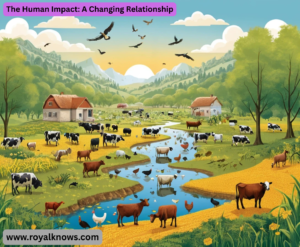
The Human Impact: A Changing Relationship
Humans, as animals, have a unique and dominant relationship with plants and other animals.
- Agriculture: The domestication of plants (wheat, rice, corn) and animals (cows, chickens, sheep) was the foundation of civilization.
- Habitat Alteration: We clear forests for farmland and cities, fundamentally changing ecosystems and often leading to species extinction.
- Climate Change: Human activity is altering the global climate, which disrupts the delicate seasonal cycles that plants and animals rely on (e.g., flowering times, migration patterns).
- Conservation: Recognizing our impact, we work to protect endangered species, preserve habitats in national parks, and restore ecosystems.
Philosophical and Cultural Perspectives
Beyond biology, plants and animals hold deep symbolic meaning in human culture.
- Animals often represent human traits: the cunning fox, the brave lion, the loyal dog.
- Plants symbolize ideas: the olive branch for peace, the rose for love, the mighty oak for strength and endurance.
- The “Natural World”: The complex interplay of plants and animals is often seen as something to be revered, studied, and protected, representing a balance that many human societies strive for.
The Blurring Boundaries: When Definitions Crumble
- We think of the categories as distinct, but nature is full of exceptions that challenge our very definitions.
The Animal that Acts like a Plant: Corals & Sponges
- Corals: Are animals (polyps) that live in vast colonies. Most are obligate symbionts with photosynthetic algae (zooxanthellae). The animal provides a protected home and CO₂; the “plant” provides sugars from photosynthesis. Without its plant partner, the coral animal will often die (coral bleaching).
- Sponges: Are some of the most ancient animals. They are sessile (fixed in place) and filter feed, lacking true tissues and organs in a way that seems plant-like. For centuries, they were mistaken for plants.
The Plant that Acts like an Animal: The Venus Flytrap & Beyond
- The Venus Flytrap is just the beginning. The Sundew uses sticky, glandular tentacles to ensnare and digest prey. The Pitcher Plant is a “pitfall trap,” luring insects into a vase-shaped leaf filled with digestive enzymes. These carnivorous plants have evolved to supplement their autotrophic diet with heterotrophy in nutrient-poor soils.
The Case of Elysia chlorotica: The Solar-Powered Sea Slug
- This is perhaps the most stunning example. This mollusk (animal) consumes algae, but instead of fully digesting them, it incorporates the algae’s chloroplasts into its own gut cells. It then uses these stolen chloroplasts to perform photosynthesis for months, living off the sugars they produce. It’s an animal that truly is, for a time, solar-powered.
 xentro6@gmail.com