


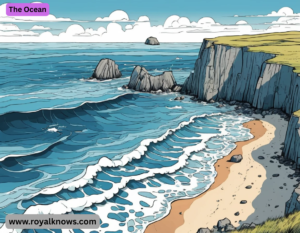
The Ocean The ocean is a vast, dynamic body of saltwater that covers over 70% of Earth’s surface, playing a crucial role in climate regulation, biodiversity, and human livelihoods. It is divided into five major basins: the Pacific, Atlantic, Indian, Southern (Antarctic), and Arctic Oceans.
Key Facts About the Ocean:
- Covers ~361 million sq km (139 million sq miles)
- Average depth: ~3,688 meters (12,100 feet)
- Deepest point: Mariana Trench (~10,984 meters / 36,037 feet)
Importance of the Ocean:
- Climate Regulation – Absorbs CO₂ and heat, influencing weather patterns.
- Biodiversity – Home to millions of species, many still undiscovered.
- Food & Resources – Provides fish, minerals, and potential renewable energy.
- Transport & Trade – 90% of global trade occurs via shipping routes.
- Oxygen Production – Phytoplankton generate ~50% of Earth’s oxygen.
Threats to the Ocean:
- Pollution (plastics, oil spills, chemicals)
- Overfishing & habitat destruction
- Climate Change (rising temperatures, acidification, coral bleaching)
- Sea Level Rise (threatening coastal communities)
Conservation Efforts
- Marine Protected Areas (MPAs)
- Plastic waste reduction (e.g., bans on single-use plastics)
- Sustainable fishing practices
- Global agreements (e.g., UN’s High Seas Treaty)
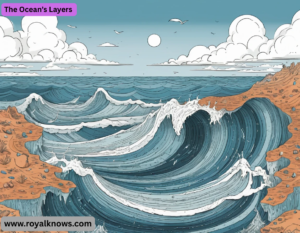
The Ocean’s Layers
- Sunlight Zone (Epipelagic, 0–200m): Warmest, most life-rich (phytoplankton, fish, sharks, turtles).
- Twilight Zone (Mesopelagic, 200–1,000m): Dim light; home to bioluminescent creatures (squid, jellyfish).
- Midnight Zone (Bathypelagic, 1,000–4,000m): Total darkness; bizarre adaptations (anglerfish, giant squid).
- Abyssal Zone (4,000–6,000m): Near-freezing, high pressure; scavengers (sea cucumbers, zombie worms).
- Hadal Zone (Trenches, >6,000m): Only 45 known trenches; extreme life (snailfish, microbes near hydrothermal vents).
Incredible Marine Ecosystems
- Coral Reefs: “Rainforests of the sea” (25% of marine species); dying due to bleaching (warming + acidification).
- Kelp Forests: Underwater “towers” of algae; shelter for otters, fish, and seals.
- Deep-Sea Vents: Superheated, mineral-rich jets supporting chemosynthetic life (no sunlight needed!).
- Open Ocean (Pelagic Zone): Includes migratory giants (whales, tuna, sharks) and drifting plankton.
- Mangroves & Seagrass Beds: Coastal nurseries for fish; sequester 3x more carbon than forests.
Unsolved Ocean Mysteries
- 95% remains unexplored—we’ve mapped Mars better than our seabed.
- The Bloop (1997): A mysterious ultra-low-frequency sound; likely icebergs, but sparked sea monster theories.
- Milky Sea Phenomenon: Vast glowing waters (caused by bioluminescent bacteria).
- Underwater Crop Circles: Intricate sand patterns made by pufferfish (discovered in 1995).
Human Impact & Urgent Threats
- Plastic Pollution: 8–12 million tons enter yearly; Great Pacific Garbage Patch = 2x Texas.
- Overfishing: 90% of fish stocks overexploited; bycatch kills dolphins, turtles, seabirds.
- Acidification: CO₂ absorption lowers pH, dissolving shells/coral.
- Dead Zones: 500+ oxygen-deprived areas (from fertilizer runoff).
- Deep-Sea Mining: Risks destroying undiscovered ecosystems for rare metals.
How You Can Help
- Reduce plastic use (bags, straws, microbeads).
- Eat sustainable seafood (check Seafood Watch guides).
- Support ocean NGOs (Oceana, Surfrider, Sea Shepherd).
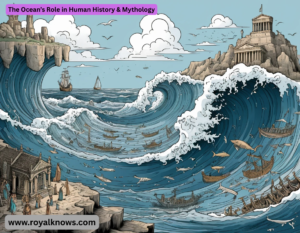
The Ocean’s Role in Human History & Mythology
- Ancient Navigators: Polynesians crossed the Pacific using stars, waves, and bird behavior 3,000 years ago.
- Lost Cities: Underwater ruins like Yonaguni Monument (Japan) and Heracleion (Egypt) spark debates about ancient civilizations.
- Sea Monsters: From Norse Kraken to Māori Taniwha, oceans birthed legends (some based on real creatures like colossal squid).
Extreme Ocean Phenomena
- Rogue Waves: Once myths, now confirmed—100ft+ walls of water (caused by wave merging).
- Black Smokers: Superheated (700°F!) hydrothermal vents spewing minerals, supporting alien-like life.
- Brinicles: “Icicles of death” sinking to the seafloor, freezing everything in their path.
- Underwater Rivers & Waterfalls: Subsea currents like the Denmark Strait Cataract (3x Niagara Falls’ volume).
Ocean Exploration Tech
- AUVs (Autonomous Underwater Vehicles): AI-driven bots mapping seabeds (e.g., Boaty McBoatface).
- Satellite Oceanography: Tracking currents, temps, and plastic patches from space.
- Neuralink for the Sea? Projects like Project CETI aim to “decode” sperm whale communication using AI.
Bizarre & Beautiful Marine Life
- Immortal Jellyfish (Turritopsis dohrnii): Reverts to infancy when stressed.
- Mimic Octopus: Impersonates lionfish, flatfish, and sea snakes.
- Vampire Squid: Lives in oxygen-minimum zones; turns inside-out when threatened.
- Giant Tube Worms: At vents, grow 8ft tall with no mouth—survive on symbiotic bacteria.
The Ocean’s Climate “Tipping Points”
- AMOC Collapse: Atlantic currents slowing (could plunge Europe into ice-age-like winters).
- Methane Hydrates: Seabed “fire ice” could release gigatons of methane if destabilized.
- Coral Extinction: 90% could die by 2050, collapsing fisheries for 500M+ people.
Future of the Ocean
- Floating Cities: Concepts like Oceanix (UN-backed sustainable habitats).
- Deep-Sea Medicine: Sponges and cone snails yielding cancer drugs and painkillers.
- Legal Personhood: New Zealand granted the Whanganui River legal rights—could oceans be next?
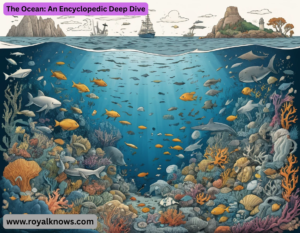
The Ocean: An Encyclopedic Deep Dive
The Physics of the Ocean
- Thermohaline Circulation: The “global conveyor belt” moves water for 1,000+ years, driven by temperature (thermo) and salinity (haline).
- Tsunamis: Caused by underwater earthquakes, landslides, or volcanic eruptions—waves travel 500+ mph in deep water but slow and grow near shore.
- Tides: Moon’s gravity pulls water (high tide), while Earth’s rotation creates a second bulge (12-hour cycle).
Ocean Chemistry: Why is the Ocean Salty?
- Salt Origins: Erosion of rocks (sodium) + volcanic vents (chloride) = sodium chloride (salt).
Salinity Variations:
- Red Sea (4.1% salt) – High evaporation.
- Baltic Sea (0.5% salt) – Rivers dilute it.
- pH Drop: Since 1850, ocean acidity ↑30% due to CO₂ absorption.
The Ocean in Space?
- Europa (Jupiter’s Moon): Subsurface ocean 2x Earth’s water volume under icy crust.
- Titan (Saturn’s Moon): Methane/ethane seas—could host exotic, non-water-based life.
Human Feats & Ocean Records
- Deepest Dive (2022): Victor Vescovo reached 10,925m in Mariana Trench (found plastic bags).
- Longest Ocean Swim: Benoît Lecomte swam 5,980km across the Pacific (2018; 6 months).
- Oldest Shipwreck: 4,300-year-old Egyptian vessel found near Black Sea (2023).
The Ocean’s Economic Power
- “Blue Economy” Value: $2.5 trillion/year (fishing, tourism, shipping, energy).
- Most Valuable Fish: Bluefin tuna—$3M+ per fish in Japan auctions.
- Deep-Sea Mining Potential: Cobalt, nickel for batteries—but at what ecological cost?
Sound in the Ocean
- SOFAR Channel: A deep “sound highway” where whales communicate across oceans.
- Loudest Marine Animal: Sperm whale clicks reach 230dB (louder than a rocket launch).
- Human Noise Pollution: Ship sonar disrupts whales, causing strandings.
The Ocean’s Most Dangerous Spots
- Devil’s Sea (Japan’s Bermuda Triangle): Mysterious ship disappearances.
- Strait of Malacca: Pirate attacks still occur (2023: 115 incidents globally).
The Future: Can We Save the Ocean?
- Hope Spots: Marine reserves like Galápagos show recovery.
- Breakthroughs: Coral IVF, oyster reefs as wave barriers.
The Ocean: A Living Library of Earth’s Past, Present, and Future
I. The Ocean as Time Machine
- Ancient Water Reservoirs
- Antarctic brine lakes isolated for 15 million years
Climate Archives
- Sediment cores preserve 200M+ years of Earth’s history
- Coral bands record climate data like tree rings
Living Fossils
- Coelacanth: “Dinosaur fish” unchanged for 400M years
- Horseshoe crabs: Older than the dinosaurs (450M years)
The Ocean’s Invisible Cities
The Whale Pump System
- Great whales vertically mix nutrients through daily migrations
- Each whale carcass = 50+ years of deep-sea habitat
- Coral Communication Networks
- Fish-cleaning stations as underwater social hubs
Get article on dpf file……Click now
………The Ocean…….
 xentro6@gmail.com