

Types Of Diet To Follow Of course! Choosing a diet isn’t about finding the “one perfect diet” for everyone, but about finding the right approach for your body, lifestyle, health goals, and preferences. Here is a comprehensive guide to the most popular and well-regarded types of diets, categorized for clarity.
Important First Step:
- Types Of Diet To Follow Before starting any new diet, especially if you have underlying health conditions, it is highly recommended to consult with a doctor or a registered dietitian.
Category 1: Diets Focused on Weight Management & Calorie Control
- These diets primarily create a calorie deficit (burning more calories than you consume) to promote weight loss.
Calorie Counting / Flexible Dieting (IIFYM)
- Core Principle: Tracking your daily intake of calories and sometimes macronutrients (protein, carbs, fat). The idea is “If It Fits Your Macros,” meaning you can eat any food as long as it fits within your daily targets.
- Best For: People who want flexibility, don’t want to eliminate food groups, and are comfortable with tracking apps.
- Pros: Teaches portion control, no foods are “off-limits,” very data-driven.
- Cons: Can be time-consuming, may lead to prioritizing “junk” food that fits macros over nutrient-dense foods.
Intermittent Fasting (IF)
- Core Principle: Cycling between periods of eating and fasting.Popular methods include the 16/8 method (fast for 16 hours, eat within an 8-hour window) or the 5:2 method (eat normally for 5 days, restrict calories for 2 non-consecutive days).
- Best For: People who aren’t hungry in the morning and prefer larger meals. It can simplify eating decisions.
- Pros: May improve insulin sensitivity, can simplify your day (fewer meals to plan), may support cellular repair processes (autophagy).
- Cons: Can be difficult to adjust to initially, may not be suitable for those with certain medical conditions or a history of eating disorders.
Category 2: Diets Focused on Whole Foods & Specific Food Groups
- These diets emphasize food quality, sourcing, and the inclusion or exclusion of specific food groups.
Mediterranean Diet
- Types Of Diet To Follow Core Principle: Based on the traditional eating patterns of countries bordering the Mediterranean Sea.
- Foods to Eat: Abundant fruits, vegetables, whole grains, legumes, nuts, seeds, and olive oil. Moderate amounts of fish, poultry, and dairy (especially cheese and yogurt). Red meat and sweets are limited.
- Best For: Almost everyone. It’s consistently ranked as one of the best diets for overall health, heart health, and longevity.
- Pros: Heart-healthy, rich in antioxidants and fiber, sustainable and enjoyable.
- Cons: Can be more expensive due to the focus on fresh produce, fish, and high-quality olive oil.
Plant-Based & Vegan Diets
- Core Principle: Excludes all or most animal products. Vegan is strict (no meat, dairy, eggs, honey). Plant-Based can be a looser term, focusing mainly on foods from plants but may include some animal products.
- Best For: Those motivated by ethical, environmental, or health reasons.
- Pros: Can be very high in fiber and nutrients, linked to lower risk of heart disease and some cancers. Effective for weight loss.
- Cons: Requires careful planning to avoid deficiencies (especially Vitamin B12, Iron, Calcium, Omega-3s).

Paleolithic (Paleo) Diet
- Core Principle: Eating foods presumed to be available to hunter-gatherers during the Paleolithic era.
- Foods to Eat: Meat, fish, eggs, vegetables, fruits, nuts, seeds.
- Foods to Avoid: Grains, legumes (beans, peanuts, lentils), dairy, refined sugar, and processed oils.
- Best For: People looking to eliminate processed foods and who feel better on a lower-carb, higher-protein diet.
- Pros: Emphasizes whole, unprocessed foods. Can help with reducing processed food intake and stabilizing blood sugar.
- Cons: Very restrictive, can be difficult to maintain long-term. Eliminates nutrient-dense food groups like whole grains and legumes.
Ketogenic (Keto) Diet
- Core Principle: A very high-fat, very low-carbohydrate diet designed to put the body into a metabolic state called ketosis, where it burns fat for fuel instead of carbohydrates.
- Macronutrient Ratio: Typically 70-80% fat, 15-20% protein, 5-10% carbs (often under 50g net carbs per day).
- Best For: Short-term rapid weight loss, and under medical supervision for conditions like epilepsy.
- Pros: Can lead to rapid initial weight loss, may reduce appetite.
- Cons: Very restrictive and difficult to follow. Can cause “keto flu” (fatigue, headaches) initially. Long-term sustainability and health effects are still debated. Not suitable for everyone.
Category 3: Diets for Specific Health Conditions & Medical Therapy
- These diets are often prescribed or recommended by healthcare professionals.
DASH Diet (Dietary Approaches to Stop Hypertension)
- Types Of Diet To Follow Core Principle: Specifically designed to prevent and lower high blood pressure.
- Foods to Eat: Rich in fruits, vegetables, whole grains, and lean protein. It emphasizes foods high in potassium, calcium, and magnesium, and limits sodium, saturated fat, and added sugars.
- Best For: Individuals with high blood pressure or a high risk of heart disease.
- Pros: Extremely heart-healthy, backed by extensive research, balanced and nutritious.
- Cons: Requires careful label reading to manage sodium intake.
Low FODMAP Diet
- Core Principle: A short-term elimination diet to manage symptoms of Irritable Bowel Syndrome (IBS). It involves avoiding foods high in certain fermentable carbohydrates (FODMAPs) that can cause bloating, gas, and pain.
- Foods to Avoid (Initially): Certain categories of foods like those high in lactose (dairy), fructose (some fruits, honey), fructans (wheat, garlic, onions), galactans (legumes), and polyols (some sweeteners and fruits).
- Best For: Individuals diagnosed with IBS.
- Pros: Highly effective for identifying food triggers for IBS symptoms.
- Cons: Very restrictive and complex. Not meant for long-term use or weight loss.
Gluten-Free Diet
- Core Principle: Strictly avoiding the protein gluten, found in wheat, barley, and rye.
- Essential For: People with Celiac disease (an autoimmune disorder) or non-celiac gluten sensitivity.
- Note: Not inherently a “healthier” diet for the general population. Many gluten-free processed foods are high in sugar and fat to improve taste and texture.
The Flexitarian Diet
- Core Principle: A flexible, semi-vegetarian approach. The name is a blend of “flexible” and “vegetarian.” The goal is to reap the benefits of a plant-based diet without completely eliminating meat.
- How it Works: You’re primarily vegetarian but occasionally include meat, poultry, or fish. There are no strict rules, just an emphasis on adding more plant-based proteins (like lentils, beans, tofu) and plants to your plate.
- Best For: People who want to reduce their meat consumption for health or environmental reasons but aren’t ready to go fully vegetarian.
- Pros: Less restrictive and easier to maintain than a full vegan or vegetarian diet. High in fiber and nutrients.
- Cons: Requires mindful planning to ensure you’re actually reducing meat and not just eating a standard diet.
Whole30
- Core Principle: A strict 30-day “reset” elimination diet designed to change your habits and relationship with food. It’s not intended for long-term weight loss.
- Foods to Eliminate: Sugar (real and artificial), alcohol, grains, legumes, dairy, and all processed foods.
- What You Eat: Moderate amounts of meat, seafood, and eggs; lots of vegetables; some fruit; and natural fats.
- Best For: Individuals who want to identify potential food sensitivities (e.g., to dairy or gluten) and “reset” their eating patterns.
- Pros: Can be very effective for identifying food intolerances and breaking sugar cravings.
- Cons: Extremely rigid. The rules can be socially isolating. It’s not a long-term sustainable model for most people.
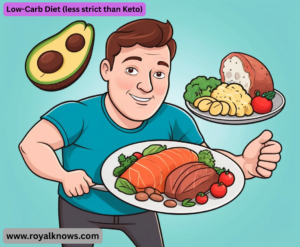
Low-Carb Diet (less strict than Keto)
- Types Of Diet To Follow Core Principle: Reducing carbohydrate intake, but not to the extreme levels of the ketogenic diet. Focuses on minimizing refined carbs (sugar, white bread, pasta) and eating more protein, fat, and vegetables.
- Examples: Atkins Diet (especially the later phases), South Beach Diet.
- Best For: People who feel sluggish after eating carbs, are insulin resistant, or find that a higher-protein diet helps them feel full.
- Pros: Can help stabilize blood sugar and reduce cravings for sugary foods. More flexible than keto.
- Cons: May be low in fiber if not careful to include plenty of low-carb vegetables, nuts, and seeds.
Carnivore Diet
- Core Principle: An extremely restrictive diet that involves eating only animal products (meat, fish, eggs, and sometimes dairy). It eliminates all plant foods.
- Best For: A very small subset of people who claim it helps with autoimmune issues. This is a highly controversial diet with significant risks.
- Pros: Anecdotal reports of reduced inflammation for some individuals. Very simple meal planning.
- Cons: Severely lacking in essential nutrients like fiber, Vitamin C, and many phytonutrients. High in saturated fat, which can be a concern for heart health long-term. Not recommended by most health professionals due to the extreme nature and lack of long-term research.
The Psychology & Realities of Dieting
Understanding these concepts is crucial for long-term success.
- Types Of Diet To Follow The Yo-Yo Effect (Weight Cycling): Many restrictive diets lead to rapid weight loss followed by rapid weight regain once the diet is stopped. This cycle can be metabolically and psychologically damaging.
- Mindful Eating vs. Dieting: Instead of following external rules, mindful eating focuses on listening to your body’s internal cues of hunger and fullness. It encourages eating slowly, without distraction, and appreciating your food.
- The All-or-Nothing Trap: This is a common mindset where one “cheat” meal leads to feeling like the entire diet is ruined, resulting in a binge. Flexible diets (like Flexitarian or Calorie Counting) can help avoid this.
- Sustainability is Key: A diet you can maintain for life is far more effective than a drastic one you can only follow for a month.
 xentro6@gmail.com