

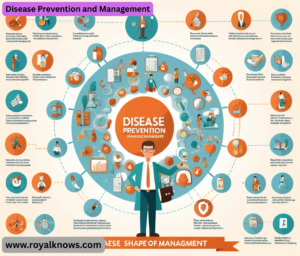
Disease Prevention and Management Of course. Here is a comprehensive overview of Disease Prevention and Management, broken down into key concepts, strategies, and modern approaches.
Introduction: A Paradigm Shift
- The traditional approach to healthcare has often been reactive—treating illness after it occurs. The modern paradigm emphasizes being proactive—preventing disease before it starts and effectively managing chronic conditions to maintain quality of life and reduce complications.
- This framework is often described in three levels, with a fourth sometimes added:
Part 1: The Three Levels of Prevention
Primary Prevention
- Goal: To prevent disease or injury from ever occurring.
- Target: Healthy individuals.
Strategies:
- Vaccinations (Immunization): Protecting against infectious diseases like measles, influenza, HPV, and COVID-19.
- Health Education and Promotion: Teaching about healthy diets, exercise, smoking cessation, and safe sex practices.
- EnvironmentalMeasures:Ensuring clean water and air, fluoridation of water, and removing lead paint.
- Legislation and Policy: Seat belt laws, smoking bans, and sugar taxes.
- Nutritional Supplements: Adding folic acid to grains to prevent birth defects.
Secondary Prevention
- Goal: To detect and treat disease early in its course, often before symptoms appear, to halt or slow its progress.
- Target: Individuals at risk or in the very early stages of disease.
Strategies:
- Preventive Medications: Prescribing statins to high-risk individuals to prevent heart attacks.
- Lifestyle Counseling for At-Risk Individuals: Diet and exercise programs for those with pre-diabetes to prevent full-onset type 2 diabetes.
Tertiary Prevention
- Target: Individuals with established, often chronic, disease.
Strategies:
- Rehabilitation: Cardiac rehab after a heart attack, physical therapy after a stroke.
- Disease Management Programs: Structured plans for conditions like diabetes (e.g., blood sugar monitoring, foot care education), COPD, and heart failure.
- Support Groups: For patients with chronic conditions like arthritis or cancer to cope emotionally and socially.
- Palliative Care: Managing pain and symptoms for serious illnesses to improve comfort.
- (Sometimes included is Primordial Prevention, which aims to prevent the development of risk factors themselves—e.g., preventing childhood obesity through policy to avoid future heart disease.)
Part 2: Key Pillars of Effective Disease Management
- For those living with chronic conditions (e.g., diabetes, hypertension, asthma, arthritis), effective management is a form of tertiary prevention. It revolves around:
- Self-Management: The individual is the most important member of their healthcare team. This includes:
- Adhering to medication regimens.
- Monitoring symptoms (e.g., daily blood glucose checks).
- Adopting and maintaining healthy lifestyle changes.

Clinical Care and Care Coordination:
- Regular Check-ups: Consistent visits with a primary care provider or specialist.
- Care Plan: A personalized, written plan outlining goals, medications, and warning signs.
- Team-Based Care: Involving doctors, nurses, pharmacists, dietitians, and mental health professionals working together.
Community Support and Resources:
- Disease Prevention and Management Access to affordable healthy food (e.g., farmers’ markets), safe spaces for exercise, and support groups.
- Technology and Innovation (Digital Health):
- Telehealth: Remote consultations with healthcare providers.
- Electronic Health Records (EHRs): Allowing different providers to seamlessly share patient information.
Part 3: The Role of Lifestyle Medicine
- A core component of both prevention and management is addressing root causes through lifestyle. The six pillars of Lifestyle Medicine are:
- Whole Food, Plant-Predominant Diet: Focus on fruits, vegetables, whole grains, legumes, nuts, and seeds.
- Regular Physical Activity: Aim for at least 150 minutes of moderate-intensity exercise per week.
- Avoidance of Risky Substances: Eliminating tobacco use and avoiding excessive alcohol consumption.
- Positive Social Connections: Maintaining strong, healthy relationships for mental and emotional well-being.
Challenges and The Future
- Health Disparities: Access to prevention and management resources is not equal, often varying by socioeconomic status, race, ethnicity, and geography.
- Cost: The upfront cost of prevention can be a barrier, despite its long-term savings for both individuals and the healthcare system.
- Personalized Medicine: The future lies in tailoring prevention and management strategies based on an individual’s unique genetic makeup, environment, and lifestyle.
The Socio-Ecological Model of Health
This model recognizes that health is influenced by a complex interplay of factors at multiple levels, not just individual choices. Effective prevention must address all these layers:
- Individual: Knowledge, attitudes, skills (e.g., a person’s decision to quit smoking).
- Interpersonal: Family, friends, social networks (e.g., support from a partner for diet changes).
- Organizational: Schools, workplaces, healthcare institutions (e.g., a company offering healthy cafeteria options and gym memberships).
- Community: Social norms, cultural context, neighborhood characteristics (e.g., access to parks and safe sidewalks for walking).
- Public Policy: Local, state, and national laws and regulations (e.g., tobacco taxes, clean air acts, mandatory food labeling).
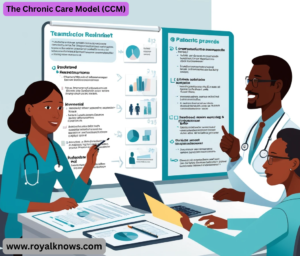
The Chronic Care Model (CCM)
This is a specific framework designed to improve the management of chronic illnesses within healthcare systems. It moves away from the reactive, acute-care model and emphasizes:
- Informed, Activated Patient: The patient is empowered and knowledgeable.
- Prepared, Proactive Team: The clinical team is organized and has clear plans.
- Productive Interactions: Visits are efficient, evidence-based, and collaborative.
- Disease Prevention and Management Support from the Community: Resources outside the clinic are leveraged.
- Health System Organization: Leadership prioritizes chronic care improvement.
- Decision Support & Clinical Information Systems: Tools like EHRs and reminders guide providers based on the latest evidence.
Precision Prevention and Personalized Management
- This emerging field uses data (especially genetic information) to tailor strategies to the individual.
- Example 1: A person with a strong family history of BRCA1/2 gene mutations may get earlier and more frequent breast cancer screenings.
- Example 2: Pharmacogenomics can determine which antidepressant or blood thinner will be most effective for a specific patient based on their genetic profile, minimizing side effects.
Part 6: Systemic and Global Challenges
Despite advancements, significant hurdles remain:
- The Inverse Care Law: This principle states that the availability of good medical or social care tends to vary inversely with the need of the population served. Those most in need of prevention (low-income, marginalized communities) often have the least access to resources, healthy food, and quality care.
- Polypharmacy: The management of multiple chronic conditions often leads to patients being on many medications simultaneously, increasing the risk of adverse drug interactions and non-adherence. Effective management requires regular “medication reconciliation.”
- Pandemic Preparedness: COVID-19 was a stark reminder that global prevention systems for infectious diseases are critical. This includes robust surveillance, rapid vaccine development, and clear public communication.
- Mental Health Integration: Mental health is inextricably linked to physical health. Depression can make diabetes management worse; chronic pain can cause anxiety. The future of effective management requires fully integrating behavioral health into primary care settings.
- The Economic Argument: Prevention is often cost-saving in the long run, but the benefits are realized over years or decades, while the costs are immediate. This creates a disincentive for payers (like governments and insurers) who may not be responsible for an individual’s long-term care.
 xentro6@gmail.com