

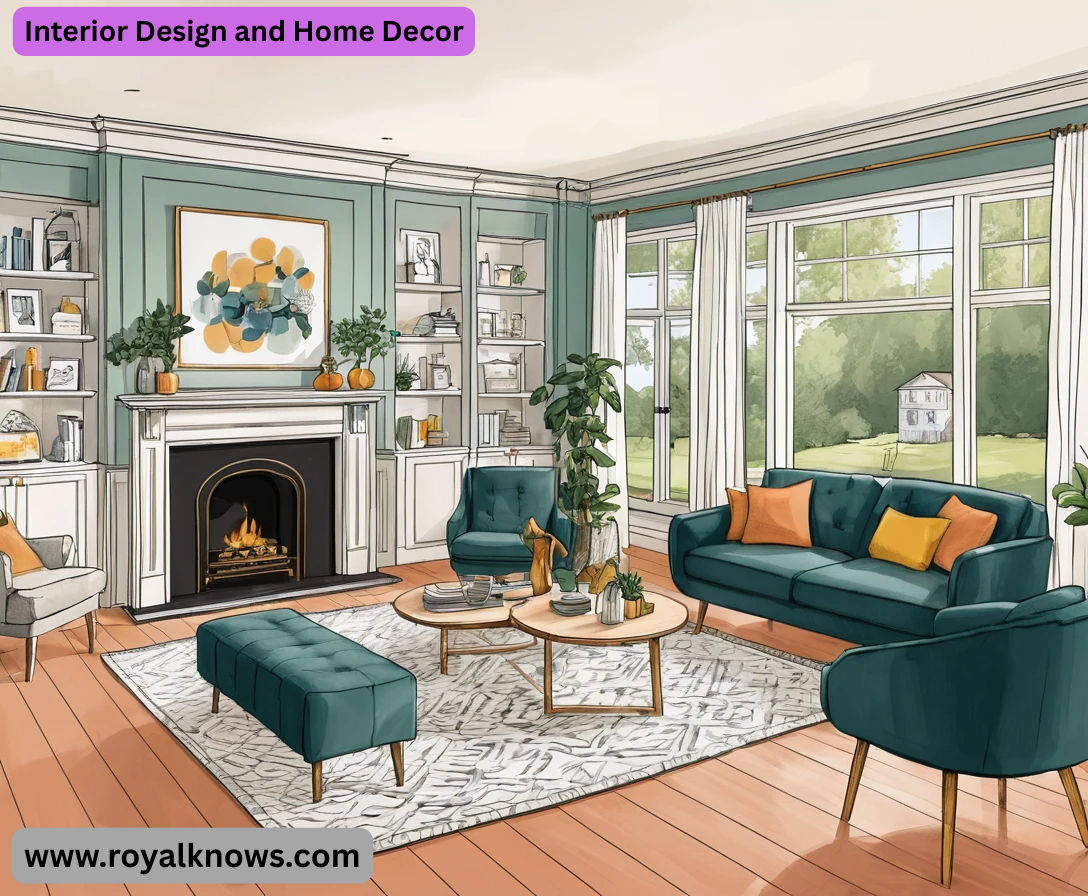
Interior Design and Home Decor Of course! This is a fantastic and creative field all about turning a house into a personalized, functional, and beautiful home. Let’s break it down into digestible parts, from foundational principles to current trends and actionable tips.

Core Principles of Design
- These are the fundamental rules that guide all good design, whether you’re a professional or a DIY enthusiast.
- Symmetrical: Mirroring elements on either side of a central point (e.g., two identical nightstands and lamps flanking a bed). Feels formal, orderly, and calm.
- Asymmetrical: Using different objects of similar visual weight to create balance (e.g., a large painting on one wall balanced by a group of smaller objects on the other side). Feels more dynamic and casual.
- Radial: Balance achieved by arranging elements around a central point (e.g., a round dining table with chairs around it).
- Rhythm and Repetition: Creating patterns of repetition and contrast to guide the eye around the room. This can be achieved by repeating a color, shape, texture, or pattern (e.g., using the same wood tone on floors, furniture, and frames, or repeating a geometric shape in pillows, art, and a rug).
- Harmony and Unity: The sense that all the elements in a room belong together and create a cohesive whole. This is achieved by sticking to a consistent style, color palette, or theme.
- Emphasis (Focal Point): Every room needs a star—an anchor that draws the eye in. This could be a natural feature like a large window with a view, or something you create, like an accent wall, a fireplace, or a striking piece of art. Arrange furniture to highlight this point.
- Contrast: Adding visual interest by juxtaposing different elements—light vs. dark colors, smooth vs. rough textures, old vs. new furniture. Contrast prevents a room from feeling flat or boring.
Key Elements to Consider
These are the tools you use to apply the principles above.
- Color: The most powerful tool. It defines mood, influences perception of space (light colors open up, dark colors cozy in), and creates harmony. Understand the basics of the color wheel (complementary, analogous, monochromatic schemes).
- Lighting (The Unsung Hero): A well-designed room uses three types of lighting:
- Ambient: General, overall illumination (e.g., overhead fixtures, recessed lights).
- Task: Light for a specific purpose (e.g., a reading lamp, under-cabinet kitchen lights).
- Texture: The surface quality of materials. Combining textures (smooth leather, nubby wool, rough jute, shiny metal, soft velvet) adds depth and tactile appeal, making a room feel rich and inviting.
- Interior Design and Home Decor Pattern: Used to add energy and personality. Mix patterns of different scales (e.g., a large floral print with a small geometric stripe) for a professional look. Ground bold patterns with solid colors.
- Line: The guiding lines of a room (furniture, architectural details) create mood. Horizontal lines (long, low sofas) feel calm and stable. Dynamic, curved lines feel soft and graceful.
Part 3: Popular Styles to Explore
Find a style (or a mix of styles) that resonates with you.
- Modern: Clean lines, minimal clutter, neutral color palettes, and emphasis on function.
- Mid-Century Modern: A subset of modern from the 1950s-60s. Characterized by organic shapes, warm wood tones, pops of color, and sleek lines (think Eames chairs and tulip tables).
- Minimalist: “Less is more.” Focuses on essential elements, ultra-clean spaces, and a monochromatic palette. It’s about quality over quantity.
- Scandinavian: Prioritizes light, functionality, and simplicity. Airy spaces, light wood floors, white walls, and hygge (coziness) achieved through textiles like sheepskins and wool throws.
- Industrial: Inspired by lofts and warehouses. Features exposed brick, ductwork, pipes, concrete floors, and metal fixtures. Often paired with reclaimed wood.
- Bohemian (Boho): Eclectic, colorful, and layered. Draws inspiration from globally inspired patterns, textiles, and artifacts. It’s personal, relaxed, and often features plants and vintage pieces.
- Coastal: Light, airy, and relaxed. Not necessarily themed; it’s more about a palette of whites, blues, and beiges, with natural textures like rattan, jute, and washed wood.
- Traditional: Inspired by 18th & 19th century European decor. Classic, rich details, dark wood, elegant furniture with curves and carvings, and symmetrical layouts.

Current Trends (2024 & Beyond)
- Biophilic Design: Deepening our connection to nature inside the home through abundant indoor plants, natural light, organic materials (wood, stone, cane), and nature-inspired colors.
- Warm Neutrals & Earth Tones: Moving away from cool grays to warm, soothing beiges, creams, terracotta, olive green, and ochre.
- Curves and Organic Shapes: Softly rounded sofas, arched doorways, oval mirrors, and curved countertops to counterpoint the sharp lines of technology and modern life.
- Sustainability & Vintage: A focus on eco-friendly materials, upcycled furniture, and buying second-hand/vintage pieces to create a unique, personal, and conscious home.
- Personalization & Maximalism: A move towards bold self-expression through gallery walls, collections on display, bold color drenching (walls, trim, and ceiling in one color), and patterned wallpapers.
- Textured Walls: Using materials like limewash paint, Venetian plaster, shiplap, or woven wood wallcoverings to add incredible depth and tactile interest.
The Design Process: A Step-by-Step Guide
Whether it’s one room or a whole house, follow this process for a cohesive result.
- Interior Design and Home Decor Define Your Goal & Feel: Before looking at furniture, ask: How do I want this room to feel? (e.g., “A serene and calming bedroom,” “An energetic and social living room,” “A focused and inspiring home office”).
- Create a Floor Plan: Measure your room! Use graph paper or a free app like Roomstyler or Planner 5D. Place your large, immovable elements first (windows, doors, fireplace). Then play with furniture layout to ensure good traffic flow (generally 2.5-3 feet for walking paths). Avoid pushing all furniture against the walls; float pieces to create intimate conversation areas.

Develop a Cohesive Color Palette:
- Choose a Foundation: Start with a dominant neutral for walls, large upholstery, and rugs (e.g., white, beige, grey). This is your canvas.
- Add a Secondary Color: This is your main color for accents, found in drapes, medium-sized furniture, or a significant accent wall.
- Incorporate an Accent Color: A pop of color used sparingly in throw pillows, art, vases, and other decor. This is where you can be bold.
- The 60-30-10 Rule: A classic decorating rule.
- The Layering Process: This is where magic happens. Build your room in layers:
- Layer 1: Architectural Shell: Floors, walls, ceilings, windows.
- Layer 2: Large Furniture: Sofa, bed, dining table, bookshelves.
- Layer 3: Textiles (Soft Goods): Rugs, curtains, throw pillows, blankets. This layer adds softness, pattern, and texture.
- Layer 4: Lighting: Ambient, task, and accent sources.
- Layer 5: Accessories: Art, mirrors, plants, books, objects. This is the personality layer—tell your story here.
- Edit and Refine: This is the most critical step. Often, less is more. Remove items that feel cluttered, don’t fit the color story, or don’t serve a purpose (even if that purpose is just “sparking joy”).
 xentro6@gmail.com