

Nutrition and Diet Of course. Here is a comprehensive overview of nutrition and diet, broken down into key concepts to help you understand how to fuel your body effectively.
Introduction: What are Nutrition and Diet?
- It involves the process of consuming, digesting, absorbing, and metabolizing nutrients to maintain health, growth, and function.
- Diet simply refers to the sum of food and drink consumed by a person. It is not inherently about restriction; it’s your regular eating pattern.
The Essential Helpers: Micronutrients
- These are vitamins and minerals needed in smaller quantities but are vital for disease prevention, growth, and well-being.
- Vitamins: Organic compounds. Key examples include:
- Vitamin D: For bone health and immune function (sunlight, fatty fish).
- Vitamin C: For immune system and collagen production (citrus fruits, bell peppers).
- B Vitamins: For energy production and brain function (whole grains, meat, leafy greens).
- Minerals: Inorganic elements. Key examples include:
- Calcium: For bones and teeth (dairy, leafy greens, fortified plant milks).
- Iron: For carrying oxygen in the blood (red meat, spinach, lentils).
- Potassium: For blood pressure regulation (bananas, potatoes, beans).
The Foundation of Life: Water
Water is essential for every single bodily process:
- Regulates body temperature.
- Lubricates joints.
- Transports nutrients and oxygen to cells.
- Flushes out waste products.
- A general guideline is to drink 8 glasses (2 liters) per day, but needs vary based on activity level and climate.
Principles of a Healthy and Balanced Diet
- There is no single “perfect” diet for everyone, but these principles are universally endorsed by health experts:
- Eat Whole Foods: Base your diet on foods that are as close to their natural state as possible (e.g., an apple instead of apple juice).
- Choose Whole Grains: Opt for whole grains (brown rice, whole-wheat bread) over refined grains (white rice, white bread) for more fiber and nutrients.
- Include Lean Protein: Incorporate a variety of protein sources, both animal and plant-based.
- Prioritize Healthy Fats: Choose unsaturated fats (from plants and fish) and limit unhealthy trans and saturated fats (often found in processed foods).
- Limit Ultra-Processed Foods: Minimize foods high in added sugars, sodium, and unhealthy fats. These often provide “empty calories” with little nutritional value.
- Eat slowly and without distraction to enjoy your food and prevent overeating.
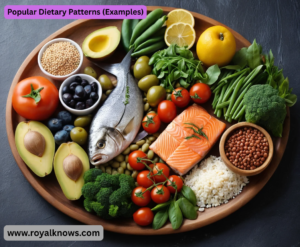
Popular Dietary Patterns (Examples)
- Different diets apply these principles in various ways.
- Mediterranean Diet: Focuses on fruits, vegetables, whole grains, legumes, olive oil, and fish. Linked to heart health and longevity.
- Plant-Based/Vegan Diet: Excludes all animal products. Requires careful planning to ensure adequate protein, iron, vitamin B12, and calcium.
- Flexitarian Diet: A primarily vegetarian diet that occasionally includes meat or fish.
- Low-Carb & Keto Diets: Restrict carbohydrates to shift the body’s primary fuel source to fat. Can be effective for weight loss and blood sugar control but can be restrictive.
- It cycles between periods of eating and fasting (e.g., 16:8 method).
Debunking Common Nutrition Myths
- Nutrition and Diet Myth: “Carbs make you fat.”
- Truth: Excess calories from any source lead to weight gain. Whole-food carbs are essential for energy. The problem is often refined carbs and sugars in processed foods.
- Myth: “You need to detox or cleanse.”
- Truth: Your liver and kidneys are incredibly effective natural detoxifiers. A healthy diet supports them; extreme cleanses are unnecessary and can be dangerous.
- Myth: “All fat is bad.”
- Truth: Healthy unsaturated fats are crucial for your health. The “low-fat” trend often led to foods being loaded with sugar to compensate for taste.
- Myth: “Eating late at night causes weight gain.”
- Truth: It’s your total daily calorie intake that matters.
How to Apply This Knowledge: Simple Steps
- Read Food Labels: Learn to identify added sugars, sodium, and unhealthy fats.
- Cook at Home More: This gives you full control over the ingredients in your food.
- Plan Your Meals: A little planning prevents last-minute unhealthy choices.
- Stay Hydrated: Keep a water bottle with you throughout the day.
- Don’t Demonize Foods: It’s okay to enjoy treats in moderation.
Beyond the Basics: Advanced Nutritional Concepts
The Power of Fiber
- Benefits: Aids digestion, prevents constipation, helps maintain a healthy gut microbiome, and increases satiety (feeling full), which can aid in weight management.
Gut Health: The Microbiome
- Your digestive system is home to trillions of bacteria, both good and bad, collectively known as the gut microbiome.
- Why it matters: A healthy gut microbiome is linked to improved immunity, mental health, reduced inflammation, and better digestion.
How to feed it:
- Prebiotics: These are types of fiber that act as food for your good gut bacteria (e.g., garlic, onions, leeks, asparagus, bananas).
- Probiotics: These are live beneficial bacteria themselves, found in fermented foods (e.g., yogurt, kefir, kimchi, sauerkraut, kombucha).
Understanding Food Processing: The “NOVA” Classification
- Group 1: Unprocessed or Minimally Processed Foods: Edible parts of plants/animals (e.g., fresh fruits, vegetables, eggs, milk, meat, mushrooms).
- Group 2: Processed Culinary Ingredients: Substances derived from Group 1 foods used to prepare and cook meals (e.g., oils, butter, sugar, salt).
- Nutrition and Diet Group 3: Processed Foods: Foods made by adding Group 2 ingredients to Group 1 foods to preserve or enhance them (e.g., canned vegetables, salted nuts, freshly baked bread, cheese).
- Group 4: Ultra-Processed Foods (UPFs): Industrial formulations typically with 5 or more ingredients. They are designed to be hyper-palatable and convenient but are often low in fiber and micronutrients and high in unhealthy fats, sugars, and salt.
- Examples: Soft drinks, sweet or savory packaged snacks, mass-produced bread, sugary cereals, reconstituted meat products (chicken nuggets), instant noodles.
- The Goal: Base your diet on Groups 1-3 and be highly mindful of limiting Group 4.
Navigating Diet Culture and Labels
- Nutrition and Diet It limits synthetic pesticides but does not automatically mean the food is more nutritious. An organic cookie is still a cookie.
- “Natural”: A largely unregulated and meaningless marketing term on packaging.
- “Superfood”: A marketing term, not a scientific one. No single food can provide all the answers to good health. A “super diet” built on variety is the true goal.
Tailoring Nutrition to Life Stages & Goals
- Athletes & Active Individuals: Need higher caloric intake, with a focus on carbohydrates for fuel and protein for muscle repair and synthesis. Timing of meals (e.g., a protein-rich snack post-workout) can be beneficial.
- Weight Management: Fundamentally about a sustained calorie deficit (consuming fewer calories than you burn). However, the quality of those calories matters immensely for satiety and nutrient adequacy. 300 calories of chicken and broccoli will keep you full far longer than 300 calories of soda.
- Aging Adults: Needs shift. Often, protein needs increase to prevent sarcopenia (muscle loss), and needs for certain nutrients like Calcium, Vitamin D, and B12 become more critical. Appetite may decrease, making nutrient-dense foods even more important.
- Plant-Based Eating: Requires attention to specific nutrients:
- Protein: Combine different plant sources (e.g., beans + rice) throughout the day.
- Iron (Non-Heme): Found in plants; pair with a source of Vitamin C (e.g., bell peppers, citrus) to enhance absorption.
- Vitamin B12: Not available from plants; supplementation is essential.
- Calcium: Found in fortified plant milks, tofu, and leafy greens.
Critical Thinking in Nutrition Science
- Nutrition is a young and complex science. Here’s how to interpret news and studies:
- Correlation is not Causation: A headline saying “People who eat X have lower rates of Y disease” shows a link, but it doesn’t prove X causes the lower risk. Other factors (exercise, socioeconomic status, overall diet) could be at play.
- Beware of Extreme Claims: Diets that promise miraculous results, eliminate entire food groups (without medical cause), or are based on a single study are major red flags.
- Who is Funding the Study? Be aware of potential industry bias.
Actionable Next Steps: How to Actually Do It
- The Plate Method: A simple visual guide for building a balanced meal.
- ½ Plate: Non-starchy vegetables (spinach, broccoli, peppers, carrots).
- ¼ Plate: Lean protein (chicken, fish, tofu, lentils).
- ¼ Plate: Complex carbs (quinoa, sweet potato, brown rice).
- Add a serving of healthy fat (avocado, drizzle of olive oil).
- Meal Prep: Dedicate 1-2 hours a week to wash/chop veggies, cook grains, and portion snacks. This removes daily friction from healthy eating.
- Add, Don’t Just Subtract: Instead of just thinking “I can’t eat X,” focus on what you can add. “How can I add more vegetables to my pasta?” “Can I add some berries to my breakfast?”
- Practice the 80/20 Rule: Aim to make nutritious choices 80% of the time, allowing for flexibility and enjoyment the other 20% without guilt. This is sustainable for life.
 xentro6@gmail.com