

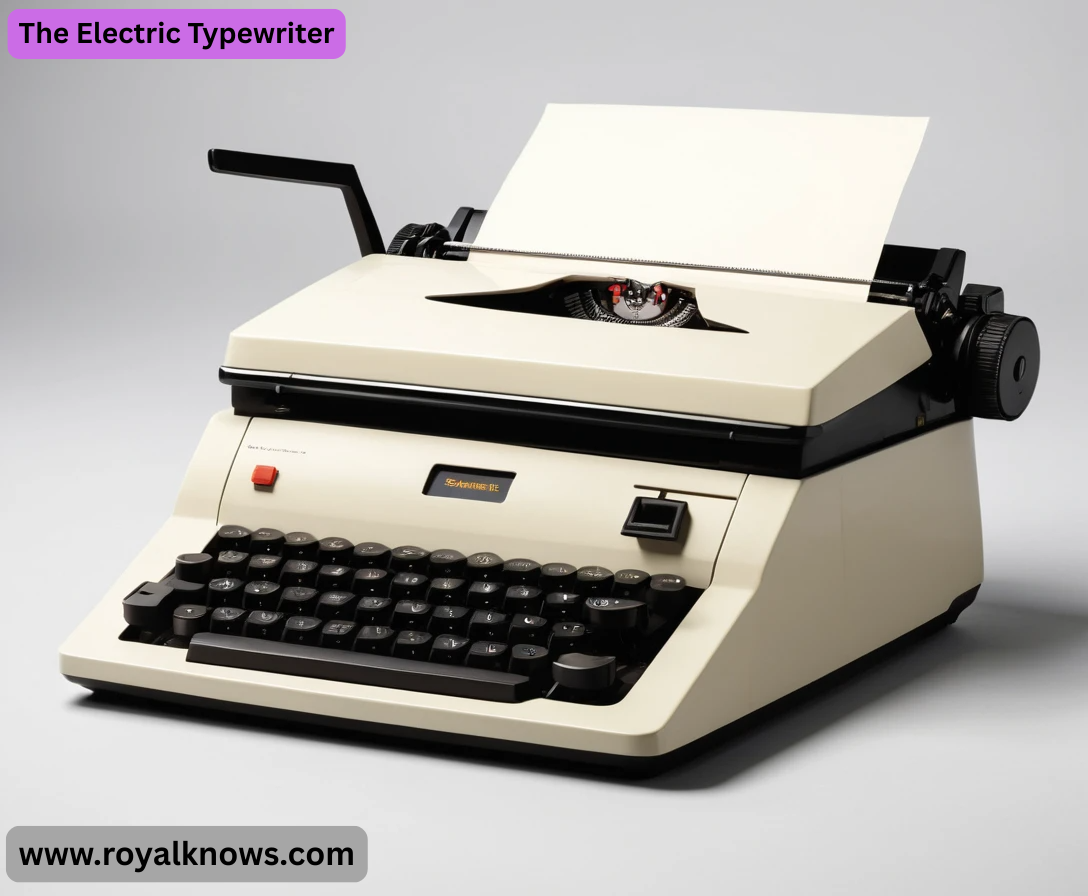
The Electric Typewriter Of course. The electric typewriter was a revolutionary step in the evolution of writing technology, bridging the gap between the purely mechanical machine and the computer. Here’s a comprehensive look at the electric typewriter.

What Was the Electric Typewriter?
- An electric typewriter is a typewriter that uses an electric motor to power the key strokes and the carriage return, rather than relying solely on the typist’s finger strength. This made typing faster, less physically taxing, and produced more consistent, professional-looking text.
- The most iconic example is the IBM Selectric, introduced in 1961, which replaced the traditional “basket” of typebars with a rotating typeball (often called a “golf ball”), making it even faster and jam-proof.
Key Features and How It Worked
- Electric Power: A small motor inside the machine provided the force.
- Touch Typing: The keys required only a light touch to activate a “typebar” or mechanism. This allowed for faster typing speeds and reduced finger fatigue.
- Carriage Return: Hitting the “return” key would automatically and swiftly zip the carriage back to the start of the next line.
- Even Impression: Every letter was struck with the same force, creating a clean, uniform look on the page without the faint and dark impressions common on manual machines.
The IBM Selectric Revolution:
- The Typeball: A removable, spherical typing element that rotated and pivoted to strike the page. This eliminated jamming because only one element moved, not a cluster of typebars.
- Changeable Fonts: You could swap out the typeball in seconds to change the typeface, a feature that was revolutionary for offices.
- No Carriage: Since the typeball moved across the page, the paper stayed in place, eliminating the heavy, shifting carriage.
Advantages Over the Manual Typewriter
- Speed and Efficiency: Faster typing and automatic carriage return significantly increased productivity.
- Reduced Fatigue: Typists could work for longer periods without tiring.
- Professional Quality: Consistent, crisp text made documents look more polished.
- Ease of Use: It was easier to type multiple carbon copies.
- Special Features: Later models introduced correction tape (like the famous “lift-off” tape), justifying margins, and even rudimentary memory.

Cultural and Historical Impact
- The Modern Office: The electric typewriter was a cornerstone of the mid-20th-century office, enabling the rapid growth of administration and business communication.
- The Secretarial Profession: It defined the role of the secretary and administrative assistant, making them highly skilled and efficient professionals.
- Democratizing Writing: While still a significant investment, it made producing clean, readable text more accessible to a wider range of people than the manual typewriter.
- A Bridge to the Digital Age: The electric typewriter was the direct precursor to the word processor and computer. Many early word processors were essentially “smart” typewriters with screens and memory. The keyboard layout we use today was standardized on these machines.
The Decline and Legacy
- The rise of the personal computer and word processing software in the 1980s and 1990s led to the electric typewriter’s rapid decline. Computers offered the undeniable advantages of easy editing, digital storage, and limitless formatting.
However, its legacy is immense:
- The QWERTY Keyboard: It cemented the QWERTY layout as the universal standard.
- Tactile Feedback: The satisfying “clack” and physical thump of an electric typewriter are still fondly remembered and emulated by mechanical keyboard enthusiasts today.
- Niche Uses: They are still used in some specific settings where multi-part forms are needed, for labeling, or for filling out pre-printed forms that can’t be run through a computer printer.
- Aesthetic and Nostalgia: The electric typewriter, especially the sleek IBM Selectric, remains an icon of industrial design and a beloved object of nostalgia.
The Major Players: A Brand Breakdown
The market was dominated by a few key manufacturers, each with a distinct identity:
- IBM: The undisputed king. IBM machines were the premium choice for corporate America.
- IBM Selectric (1961): The game-changer. With its typeball, it was faster, quieter, and more reliable than any predecessor.
- Selectric II (1971): Added a “Dual Pitch” option (10 or 12 characters per inch) and a more sophisticated correction feature.
- The “Executive” Model: A special Selectric that offered proportional spacing, giving documents a typeset, professional look that was unparalleled at the time.
- Smith-Corona: The champion of the home user and small business. Smith-Corona electrics were more affordable, reliable, and widely available than IBM for the masses. Their Smith-Corona Sterling and Coronamatic lines were incredibly popular. They were known for their distinctive shape and the satisfying “thwack” of their typebars.
- Olympia (Germany): Revered for their superb engineering and durability. Often considered the “Mercedes-Benz” of typewriters, they were a favorite of writers and professionals who valued precision and a perfect typing feel.
- Adler (Germany) & Olivetti (Italy): Other European giants known for their sleek, modernist design and robust mechanics. Olivetti, in particular, was celebrated for turning typewriters into objects of art.
- Brother & Silver-Reed (Japan): These brands emerged as strong competitors in the latter part of the electric era, offering affordability and reliability, and eventually dominating the electronic typewriter market.
The Electric Typewriter in Culture and Media
The electric typewriter isn’t just a machine; it’s a powerful cultural symbol.
- The Sound of Work: The rapid, rhythmic clatter of a busy typing pool is the soundtrack to countless mid-century films and a potent audio symbol of industry and efficiency.
- A Symbol of Female Empowerment: For many women in the post-war era, the typewriter was a ticket to financial independence. The skilled “career girl” or secretary was a central figure in 20th-century culture, from Rosalind Russell in His Girl Friday to the women of Mad Men.
- The Writer’s Tool: While many literary purists stuck with manuals, the electric typewriter was the workhorse for a generation of authors, journalists, and screenwriters. The plays of David Mamet, for instance, are intrinsically linked to the staccato, machine-gun rhythm that the electric typewriter enabled.
- The “Delete” Key Moment: The introduction of the correction key was a minor revolution. The ability to cleanly lift a mistake off the page changed the psychology of writing, reducing the anxiety of error. This was a direct conceptual precursor to the “Delete” key.
The Evolution to Electronic and Word Processors
- The “electric” typewriter eventually evolved into the “electronic” typewriter, which was the final step before the PC.
- Electronic Typewriters (Late 1970s/80s): These replaced many mechanical parts with microchips.
- Features: They introduced a small, often one-line, LCD display to preview a line of text before it was committed to paper.
- Memory: They had a small internal memory for storing phrases, addresses, or even entire documents.
- Advanced Correction: More sophisticated correction memory and search-and-replace functions.
- Auto-Features: Automatic centering, underlining, and tabulation.
- This era blurred the lines, culminating in dedicated word processors like the Wang and later, machines like the Brother WP-1, which were essentially typewriters with a floppy disk drive and a full-screen display.
The Electric Typewriter Today
Far from being extinct, it has found new life in several niches:
- Nostalgia and Aesthetics: The tactile sensation and the satisfying sound are a form of sensory feedback that modern keyboards try to emulate. For writers suffering from digital distraction, the typewriter’s single-purpose nature is a feature, not a bug.
- The “Slow Writing” Movement: Similar to the analog revival in vinyl records and film photography, using a typewriter is a conscious choice to engage physically with the act of creation, without the constant temptation to edit.
- Art and Craft: Typewriters are used by artists for creating “typewriter art,” poetry, and mixed-media projects. The specific, imperfect impression of the typeface has a unique, authentic texture.
Specialist Forms and Institutions:
- Prisons: Typewriters are often allowed where computers with internet access are not.
- Developing Regions: In areas with unreliable electricity or no internet, a robust electric typewriter is a viable tool for administration.
- Filling Pre-Printed Forms: The ability to press type directly onto multi-part carbon forms is something a standard computer printer still can’t do as effectively.
 xentro6@gmail.com