

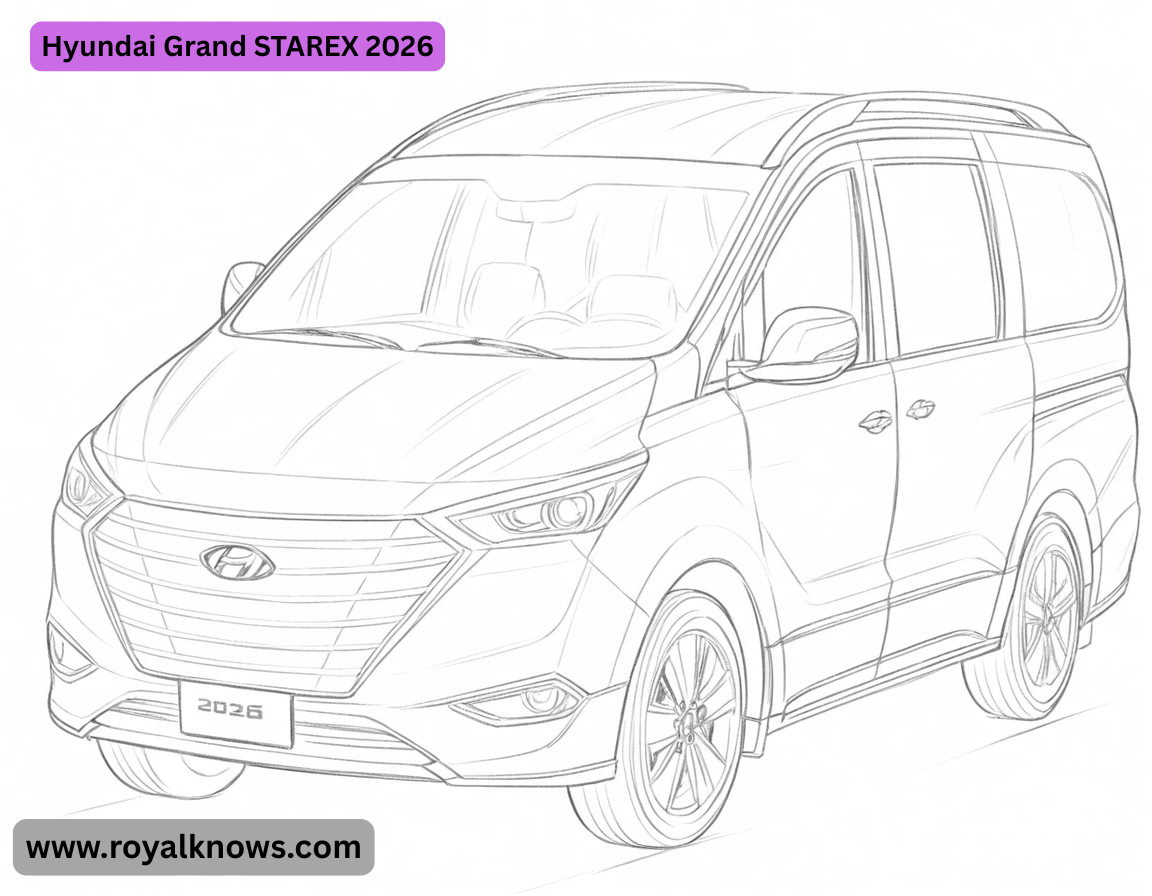
Hyundai Grand STAREX 2026 The Hyundai Grand STAREX 2026 (also known as the Hyundai STAREX in some markets) is expected to be a refreshed or next-generation version of Hyundai’s popular van/MPV (Multi-Purpose Vehicle). While Hyundai has not yet released official details for the 2026 model, we can make some predictions based on the current model and industry trends.
Exterior Design
- Modernized front grille with Hyundai’s latest design language (possibly similar to the Tucson or Palisade).
- LED headlights and taillights.
- Updated alloy wheel designs.
Interior & Comfort
- High-quality materials with improved cabin insulation.
- Advanced infotainment system (possibly a larger touchscreen with Hyundai Blue link connectivity).
- Enhanced seating configurations (8-12 passengers, depending on the variant).
Engine & Performance
- Likely to retain a 2.2L CRDI turbo diesel engine (current model produces 177 HP & 431 Nm torque).
- Possible introduction of a mild-hybrid or hybrid variant for better fuel efficiency.
- 6-speed automatic or 8-speed transmission (depending on the market).
Safety & Technology
- Hyundai Smart Sense suite (expected to include Forward Collision-Avoidance Assist, Lane Keeping Assist, Blind-Spot Monitoring, Adaptive Cruise Control).
- 360-degree camera for easier parking.
- Rear Occupant Alert to prevent leaving passengers behind.
Market Availability
- Expected in South Korea, Southeast Asia (Philippines, Indonesia), Middle East, and some Latin American markets.
- May not be sold in Europe or North America due to stricter emissions norms favoring electric/hybrid vans.
Possible Competitors:
- Toyota HIACE (Super GRANDIA)
- Kia Carnival (in some markets)
- Mercedes-Benz V-Class (for premium buyers)
- Nissan NV350 URVAN
Release Date & Price
- Expected launch: Late 2025 or early 2026.
- Price range: $30,000–$50,000 (depending on trim and market).
Powertrain & Performance Will There Be a Hybrid or Electric STAREX?
- Current Engine (2024 Model):
- 2.2L CRDI VGT Diesel (177 HP, 431 Nm) – Likely to carry over with Euro 6/BS6 compliance.
- Hybrid/Electric Potential:
- Hyundai may introduce a 48V mild-hybrid diesel to meet stricter emissions norms (similar to Kia’s hybrid vans).
- A full-electric e-STAREX is unlikely before 2027, but Hyundai is testing electric commercial vans (e.g., STRARIA Electric concept).

2. Platform & Chassis Updates
- Expected to use a modified version of the current unibody platform (shared with the Hyundai STRAIA in some markets).
- Rear-wheel-drive (RWD) layout retained for load-carrying capability.
- Suspension:
- Front: MacPherson Strut
- Rear: Multi-link (for premium variants) / Rigid Axle (for cargo versions)
- Towing Capacity: ~1,500–2,000 kg (similar to current model).
3. Interior: Tech & Luxury Upgrades
- Infotainment & Connectivity
- 10.25-inch Touchscreen (with wireless Apple Car Play/Android Auto).
- Digital Instrument Cluster (likely optional).
- Hyundai Blue link (remote start, geo-fencing, SOS emergency call).
- Rear-Seat Entertainment (optional, with HDMI/USB ports).
Seating & Comfort
- Configurations:
- 9-seater (2+2+2+3) – Popular in Asia.
- 11/12-seater – For commercial/group transport.
- Premium Features:
- Dual sunroofs (already in some markets).
- Tri-zone climate control.
- NAPPA leather seats (top trim).
5. Market-Specific Variations
South Korea:
- Top-end “Premium” trim with luxury features.
- LPG variant possible (popular in Korean taxis).
- Southeast Asia (Philippines, Indonesia, Vietnam):
- Base model (GL) with manual transmission.
- “Gold” edition with chrome accents, premium seats.
Middle East:
- Heavy-duty cooling system (for desert climates).
- Off-road package (raised suspension, skid plates – rare but possible).
7. Key Competitors Comparison
Model Engines Seating Price Range (USD) Advantage Over STAREX
- Toyota HIACE 2.8L Diesel / 2.7L Gas 9–15 $30,000–$50,000 Stronger resale value.
- Kia Carnival 3.5L V6 / 2.2L Diesel 7–11 $35,000–$55,000 More car-like handling.
- Mercedes V-Class 2.0L Diesel (190 HP) 7–8 $60,000–$100,000 Luxury branding.
STAREX2026’s Edge:
- Best value for money (space + features).
- Reliable diesel engine (key for commercial users).
- More seating configurations than rivals.
8. Potential Downsides
- No EV/Hybrid Yet: Lags behind Toyota’s hybrid HIACE (in some markets).
- Rust Issues: Older STAREX models had corrosion problems (hopefully improved).
- Limited in the West: Not sold in the US/Europe due to emissions.
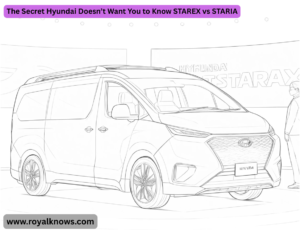
The Secret Hyundai Doesn’t Want You to Know: STAREX vs. STARIA
- Platform Sharing: The 2026 Grand STAREX is expected to share critical components with the Hyundai STARIA (but with a more traditional van shape).
- Same 2.2L CRDI engine but possibly detuned for better longevity (commercial buyers prioritize reliability over power).
- STARIA’s rear independent suspension might replace the STAREX ’s rigid axle in top trims for comfort.
- Why This Matters: Lower R&D costs = STAREX stays affordable while borrowing premium tech.
2. Under the Hood: The Diesel Engine’s Last Stand
- 2.2L CRDI VGT Turbo Diesel (Updated for 2026):
- Key Upgrade: New fuel injectors + revised ECU tuning for better cold starts and emissions compliance.
- Power: Slight bump to ~185 HP (but torque may drop to 420 Nm for Euro 6d norms).
Transmission Surprise:
- 6-speed auto stays, but an 8-speed torque-converter auto (from the Kia Carnival) could debut in luxury variants.
3. The “Black Edition” Rumor: A Sporty STAREX?
- Hyundai is testing a GRAND STAREX N-Line in Korea (spy shots show blacked-out grille, red calipers, sportier exhaust).
- Not a true “N” model, but a cosmetic pack with:
- Paddle shifters (for the automatic).
- Stiffer suspension tuning.
- Faux-leather bucket seats.
- Target: Private buyers who want a van that doesn’t look like a taxi.
5. The Hidden Weakness: Rust & Reliability Checks
- Problem Areas (Current Model):
- Rear wheel arches (mud traps moisture).
- Suspension mounts (stress cracks in high-mileage vans).
- 2026 Fixes?
- Galvanized steel patches in critical areas.
- Extended corrosion warranty (7 years in some markets).
- Pro Tip: If buying used, check the undercarriage with a magnet (too much body filler = hidden rust).
6. Market-Specific Trims (The Ones You’ve Never Heard Of)
- Middle East “Desert Cool” Edition:
- Larger radiator + auxiliary AC compressor.
- Sand-resistant air filters.
- Philippines “FX Taxi” Model:
- Vinyl seats + floor drain holes (easy cleaning).
- No rear wiper (cost-cutting).
- Australia “Outback Pack”:
- Raised suspension (20mm) + underbody armor.
- Long-range fuel tank (90L vs. standard 75L).
7. The Electric STAREX Is Coming… But Not Yet
Hyundai’s e-LCV Strategy:
- Likely based on the E-GMP platform (shared with IONIQ 5), but RWD-only for cargo versions.
Expected Specs (e-STAREX2028):
- ~100 kWh battery (~400 km range).
- Single motor (215 HP) / Dual motor (AWD, 320 HP).
- V2L (Vehicle-to-Load) for powering tools/camping.
8. Insider Buying Tips (How to Get the Best Deal)
- Best Time to Buy: December–January (dealers clear stock for new fiscal year).
- Hidden Discounts:
- Corporate/fleet buyers get 5-8% off (even for single-unit purchases).
- Bank promo rates (some lenders offer 0% interest to compete).
- Avoid These Options:
- “Premium” audio upgrades (aftermarket is cheaper).
- Dealer-installed “protection packages” (overpriced wax).
The Forbidden Prototype: Hyundai’s “STAREX RS” (Rear-Wheel Steering)
- What We Know:
- Hyundai secretly tested a STAREX with rear-wheel steering (like the Mercedes Sprinter) for tighter turns.
- Why It Was Scrapped: Cost (would’ve added $4,000+ to MSRP) and complexity for fleet buyers.
- Legacy? Some tech may appear in the 2028 e-STAREX.
The Underground Tuning Scene (What Hyundai Doesn’t Endorse)
- Illegal but Common Mods in Asia/Middle East:
- “Stage 3” Diesel Tuning: ECU remap + turbo upgrade → 220+ HP / 500+ Nm (but voids warranty).
- LPG Conversions: Saves fuel costs but burns valves over time.
- Hyundai’s Response:
- 2026 models get encrypted ECUs (harder to tune).
- Voided warranty stickers on critical components if tampered.
Get article on pdf file…Click now
……….Hyundai Grand STAREX 2026……….
 xentro6@gmail.com